Designers
Qilin Li, Ran Bian
Year
2026
Category
Product
Country
United States
Design Studio / Department
Alibaba.com Design
Three questions to the project team
What was the particular challenge of the project from a UX point of view?
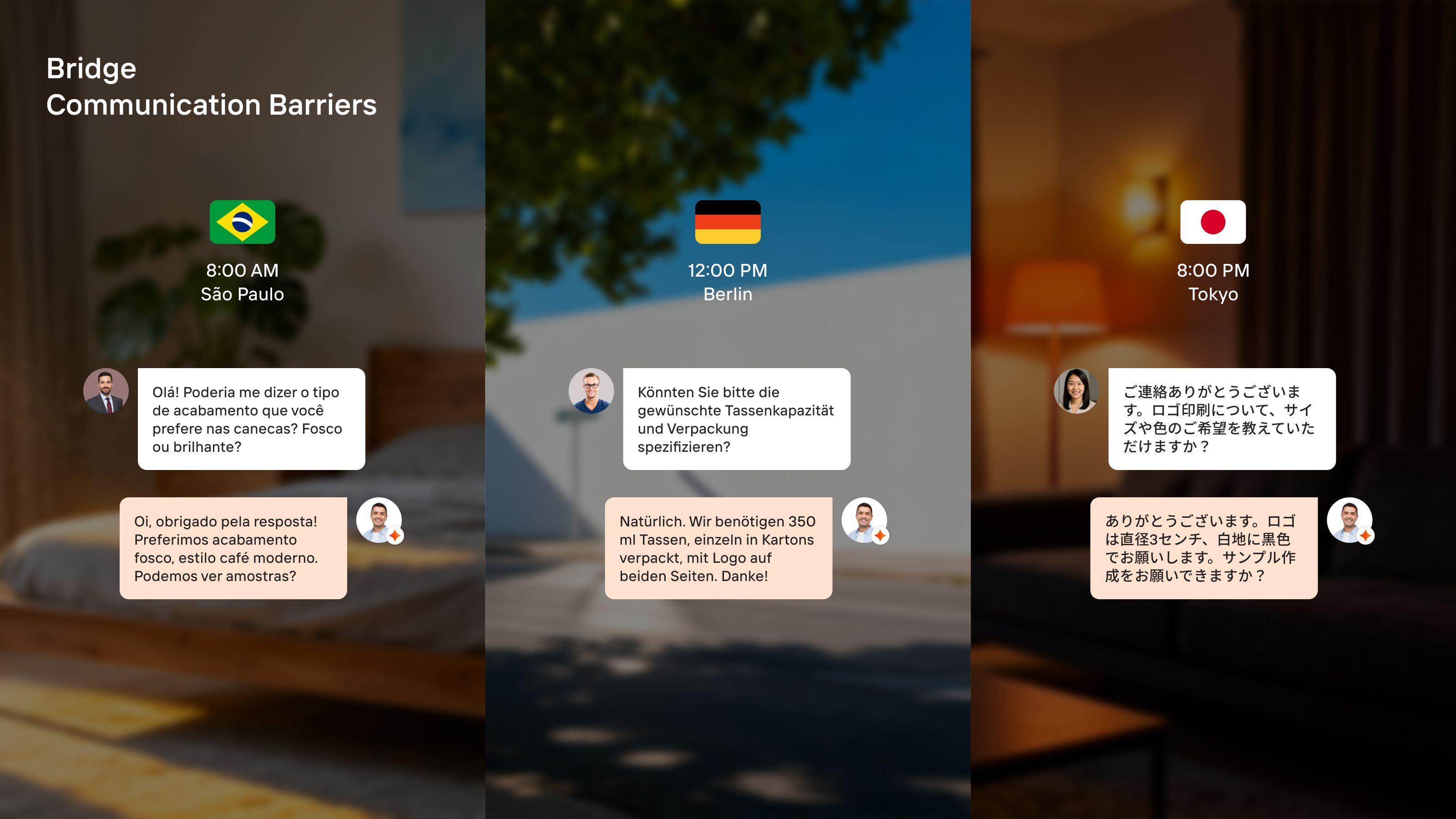
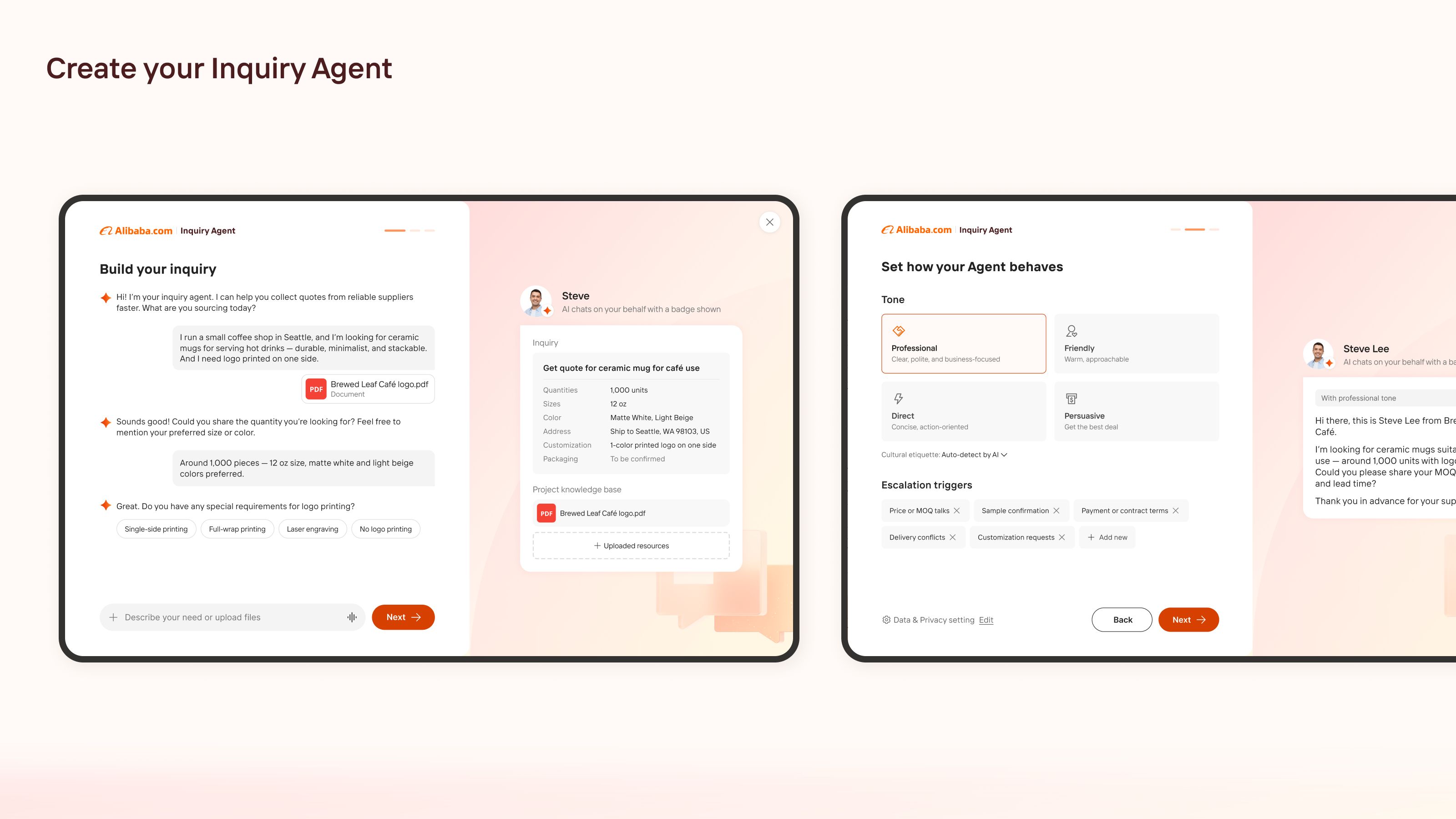
The core challenge was designing the right boundary between AI autonomy and human control. Buyers on Alibaba.com are SMBs navigating sourcing in a second language, against unfamiliar trade conventions, averaging 75 messages and 17.9 days per supplier in first screening alone. Yet research showed every buyer refused to let AI commit on price, MOQ, or contract terms. The design question became: how do you build an agent that acts confidently enough to be useful, pauses precisely when humans need to step in, and makes its next action visible and editable before it happens?
What was your personal highlight in the development process? Was there an aha!-moment, was there a low point?
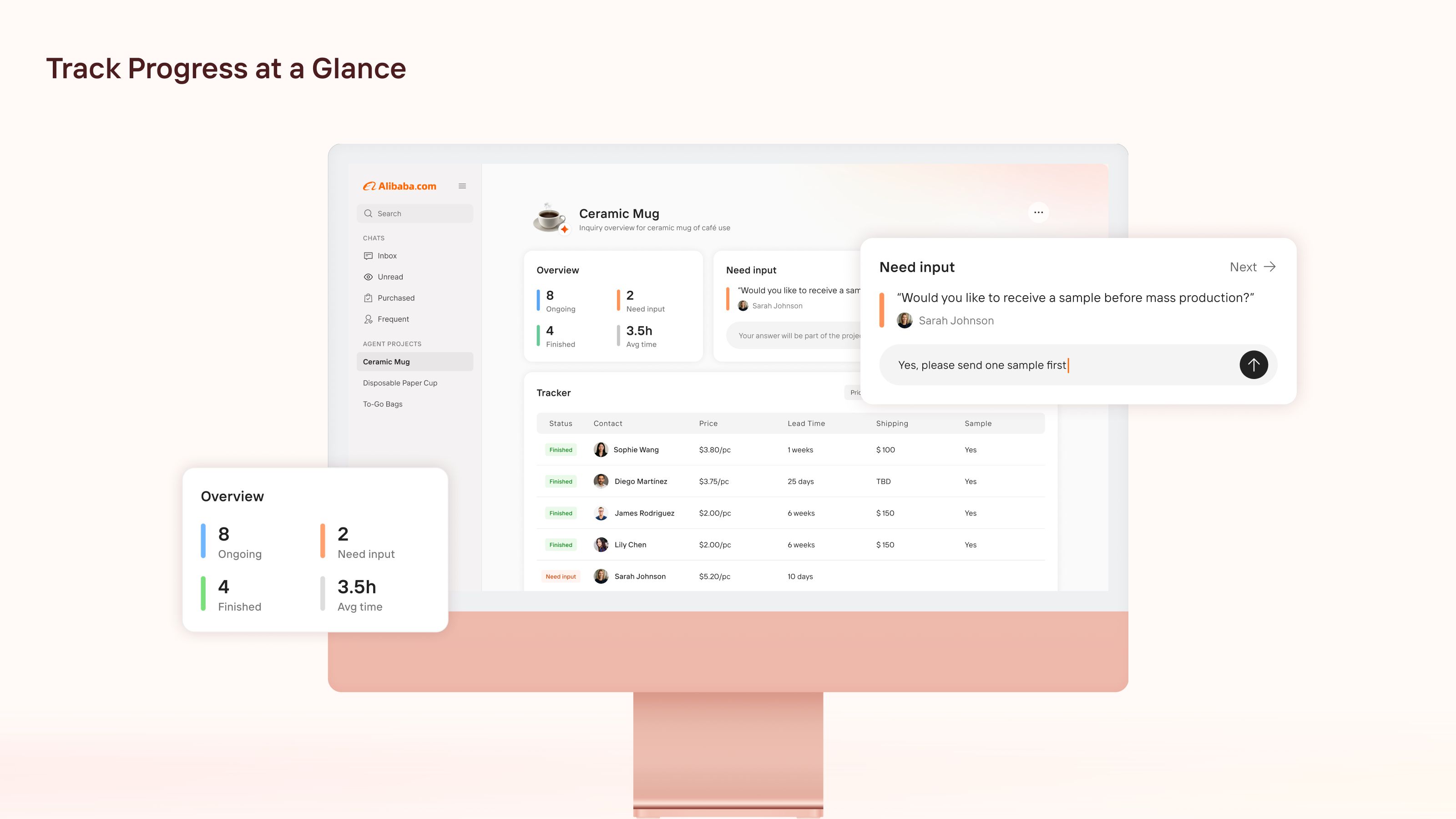
The aha-moment came from a single pattern across interviews: nine buyers were maintaining Excel sheets outside the platform to track quotes manually — one had been doing it for five years. That told us the real problem wasn't communication quality, it was the complete absence of a unified view across suppliers. It reframed everything: we weren't designing a smarter chat, we were designing a sourcing operations layer. The low point was mid-concept, when early prototypes felt like AI for AI's sake — it took the co-creation panel with real power buyers to pressure-test what 'useful control' actually meant in practice.
Where do you see yourself and the project in the next five years?
Most agentic products optimize for autonomy — do more, ask less, move faster. I think the more important frontier is the opposite: AI that earns trust incrementally by being legible at exactly the right moments. Bounded delegation — where AI acts within defined scope and hands control back cleanly — will become a standard pattern across B2B workflows wherever humans and AI share accountability for outcomes. For me, this project opened a design space I want to stay in: not just usability, but how people build working relationships with systems that act on their behalf over time.