Designers
Yafan Jin, Ningyao Yuan, Xinyu Huang, Yuqing Dong, Geyi Qi
Year
2026
Category
New Talent
Country
United Kingdom
School
Goldsmiths University of London
Teacher
Dr. Rabail Tahir
Three questions to the project team
What was the particular challenge of the project from a UX point of view?
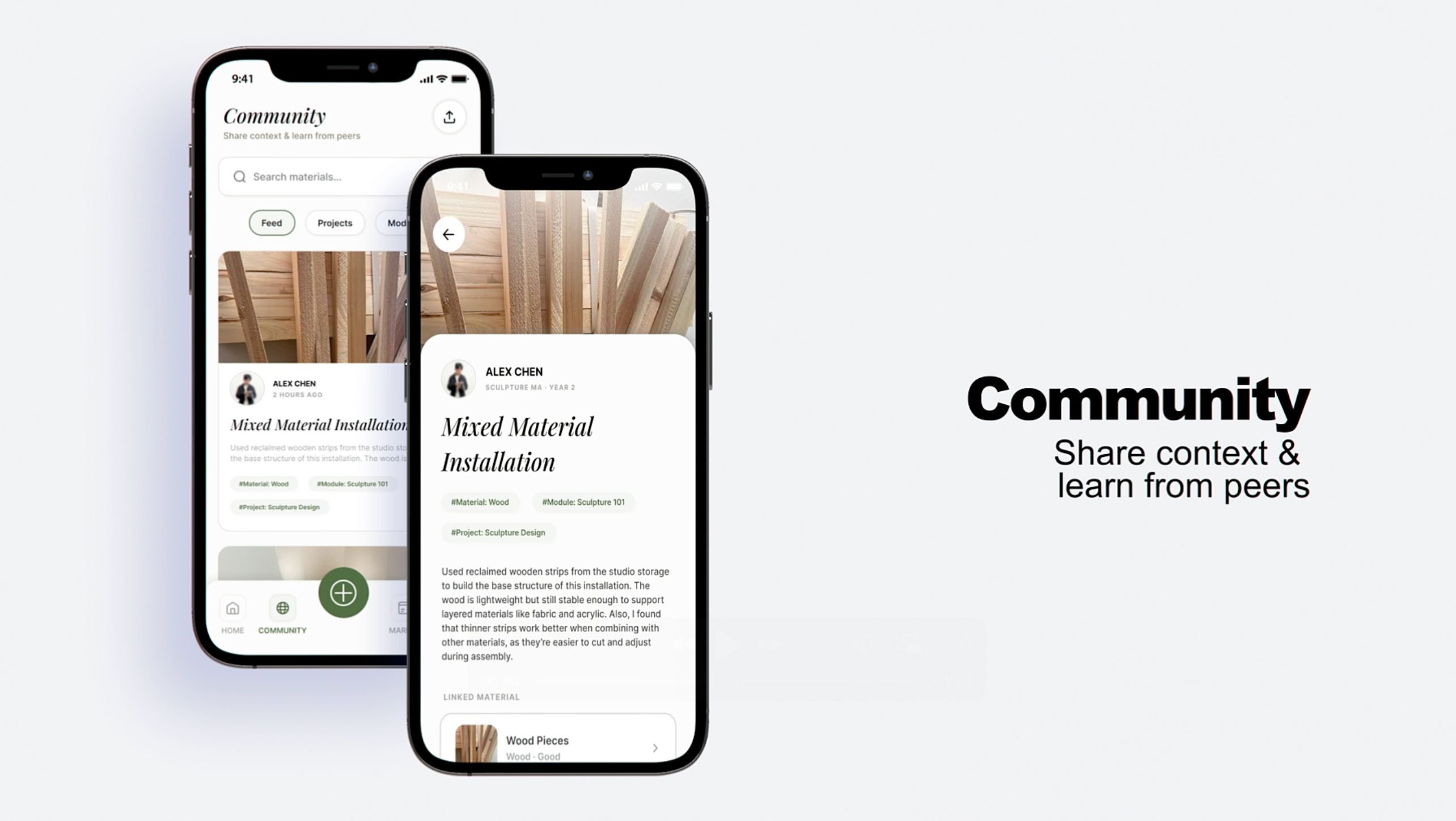
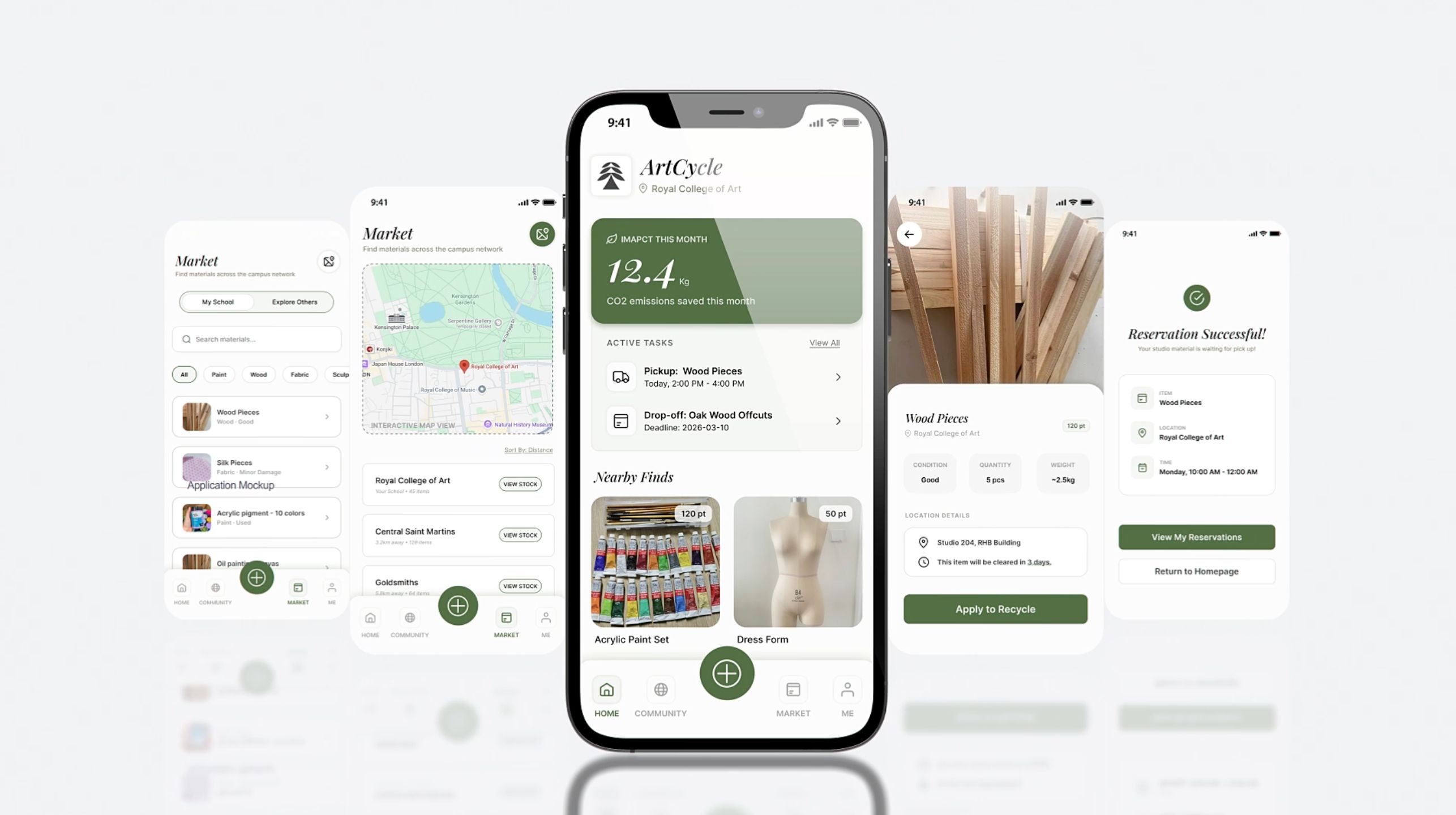
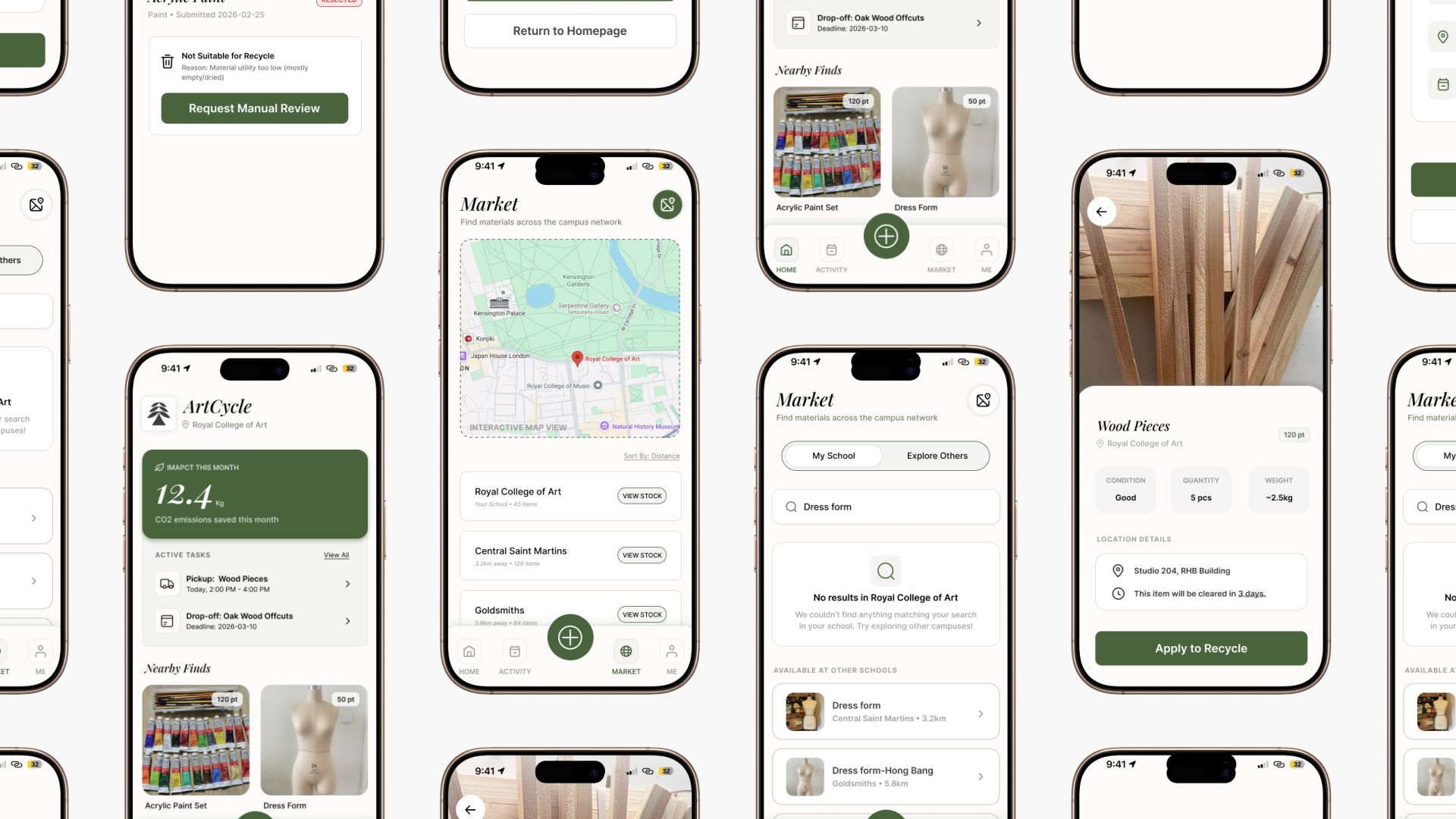
One of the main challenges was identifying a clear USP for the platform. Existing second-hand marketplaces can somehow theoretically support material reuse, so we needed to understand why students would choose our service instead. Through user research, we found that students are generally reluctant to use traditional resale platforms and struggle to find peers with matching needs. The real gap wasn't trading channels, but the lack of a resource-sharing system tailored to university life. This insight led us to reposition around a university-specific network connecting nearby campuses, improving material matching and circulation, plus a community feature for academic exchange and campus interaction.
What was your personal highlight in the development process? Was there an aha!-moment, was there a low point?
Our biggest takeaway was realising that good design is refined step by step through continuous testing. The low point came when we discovered that if a user's uploaded material was rejected by the AI review system, the entire process just stopped. It made us realise we had been over-relying on the system's judgement while overlooking the user's experience. The aha moment came from a user's question: many courses across schools tend to use similar materials, so could materials be shared between different courses? That single question broke us out of the leftover materials upload mindset, and we started thinking about connecting the platform to course projects themselves, letting materials circulate naturally at the course level.
Where do you see yourself and the project in the next five years?
We will transition ArtCycle from a UX concept into an institutional campus standard in 5 years. Years 1–2 focus on establishing physical-digital OMO storage hubs and smart lockers at Goldsmiths, using the dashboard’s empirical ROI metrics, such as captured CO2 emissions and reclaimed procurement costs to secure permanent space and long-term university funding. Years 3–5 will scale this into a cross-institutional B2B network financed by licensing fees, expanding our circular framework to urban creative districts to permanently disrupt linear waste models. Professionally, our team will evolve into design entrepreneurs, merging AI automation, service design, and physical space orchestration to solve complex, real-world structural challenges.