Designers
Sagarika Jayawant, Jayee Dhawan
Year
2026
Category
Concept
Country
United States
Three questions to the project team
What was the particular challenge of the project from a UX point of view?
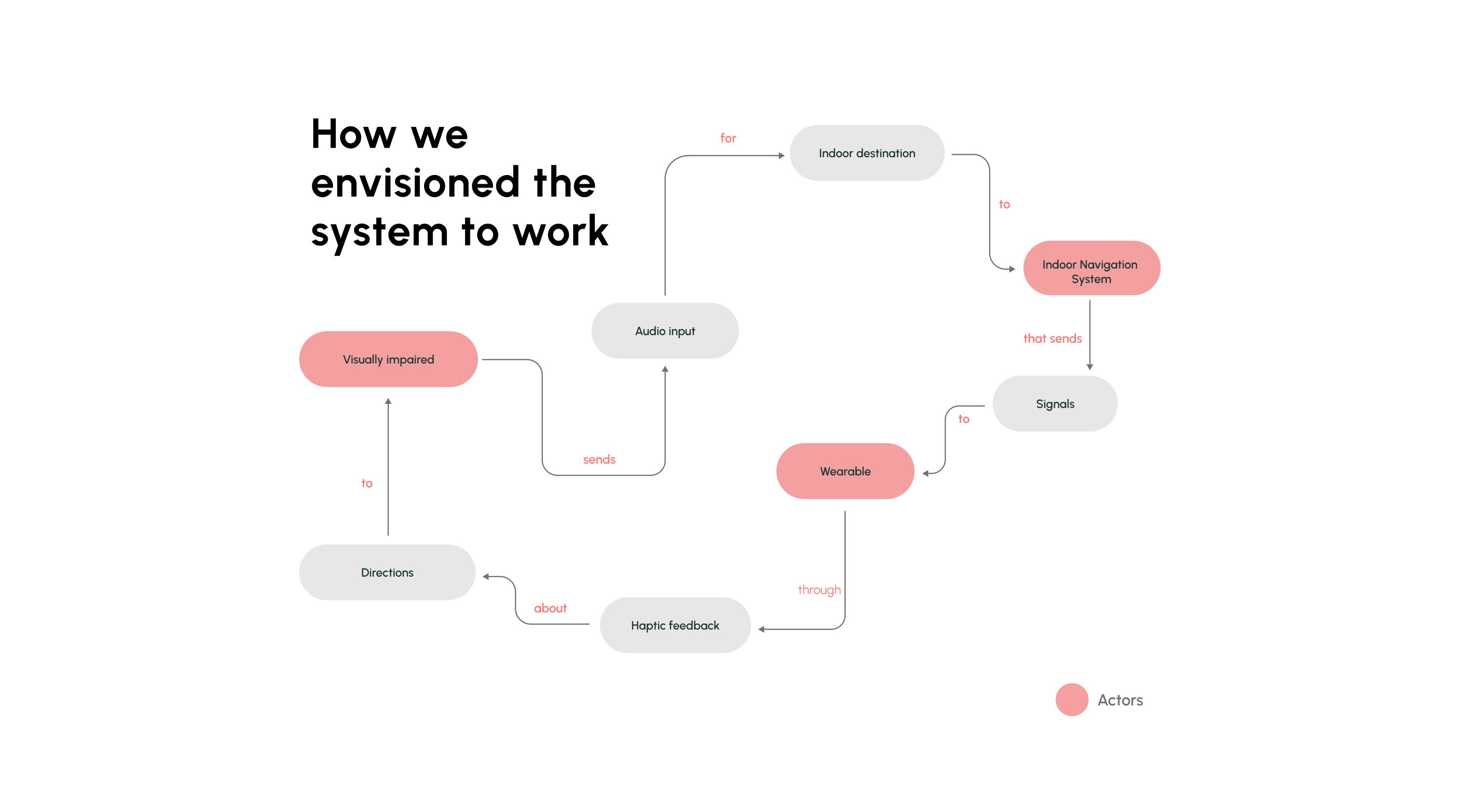
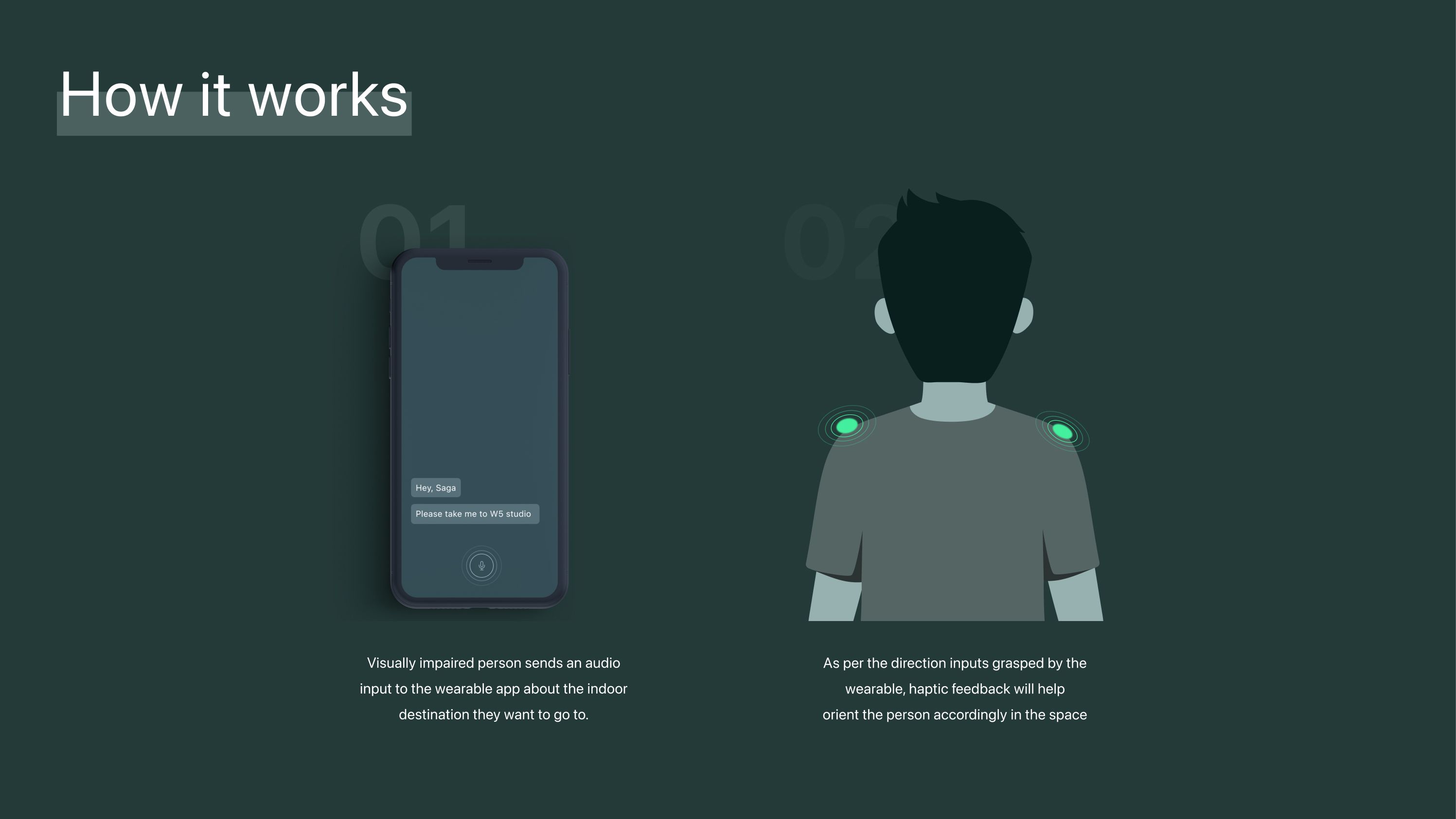
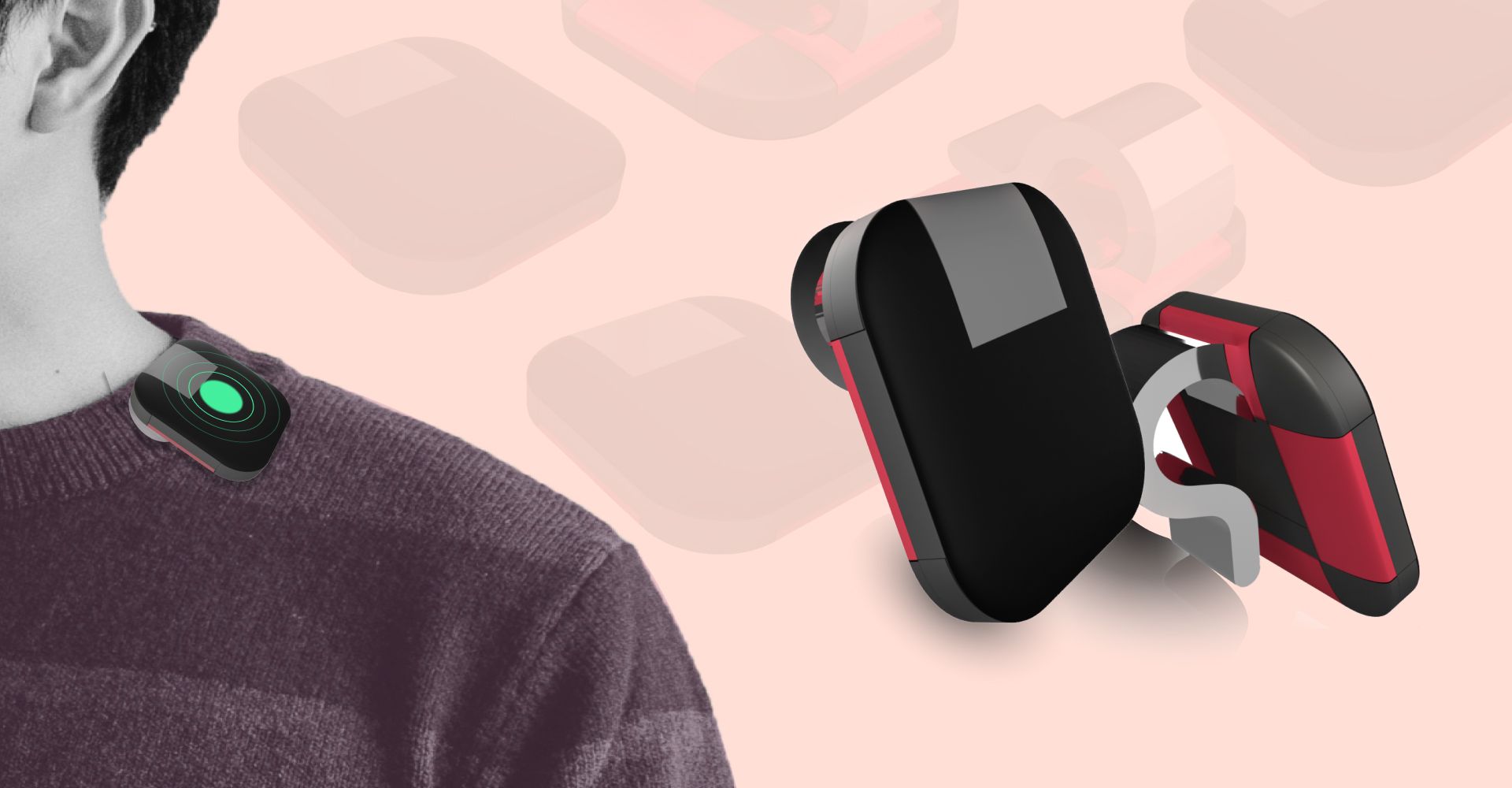
The UX challenge was to design navigation without relying on sight or continuous audio. Buzz Nav had to communicate direction, timing, and confidence through touch in a way that felt immediate, learnable, and safe while a user was already moving. This meant translating complex indoor wayfinding into simple haptic cues that would not overload the user or distract from surrounding sounds. Another challenge was trust: users need to know when to turn, continue, or stop without second-guessing the system. The shoulder placement, cue language, and clip-on form were designed to make guidance feel natural, discreet, and integrated into everyday movement.
What was your personal highlight in the development process? Was there an aha!-moment, was there a low point?
The highlight was seeing Buzz Nav evolve through many explorations rather than starting with the final wearable. We explored audio guidance, remote assistance, Arduino prototypes, environmental sensors, vibration patterns, and different body placements. The aha moment came when guidance felt clearer through the shoulders than through more instructions. Left, right, forward, and stop became easier to understand when felt on both sides of the body. The low point was the environmental sensor idea. Placing sensors indoors sounded simple at first, but making them communicate reliably and trigger haptic feedback at the right moment was challenging. That pushed us to focus the concept on what mattered most: clear, intuitive guidance through touch.
Where do you see yourself and the project in the next five years?
In the next five years, we see ourselves continuing to design inclusive products that make technology feel more human and useful in daily life. For Buzz Nav, we want to build on the research, interviews, prototypes, and haptic testing already completed, and take the concept toward a more refined product. The next phase would focus on improving the clip-on form, strengthening the environmental sensor system, and exploring pilots with campuses, hospitals, and transit hubs. Our hope is that Buzz Nav becomes a practical assistive navigation product and helps expand how we design interfaces beyond screens and sound.