Designers
Constantin Schott, Rohith Rajesh Kumar
Year
2026
Category
New Talent
Country
Sweden
School
Umeå Institute of Design
Teacher
Thomas Degn
Three questions to the project team
What was the particular challenge of the project from a UX point of view?
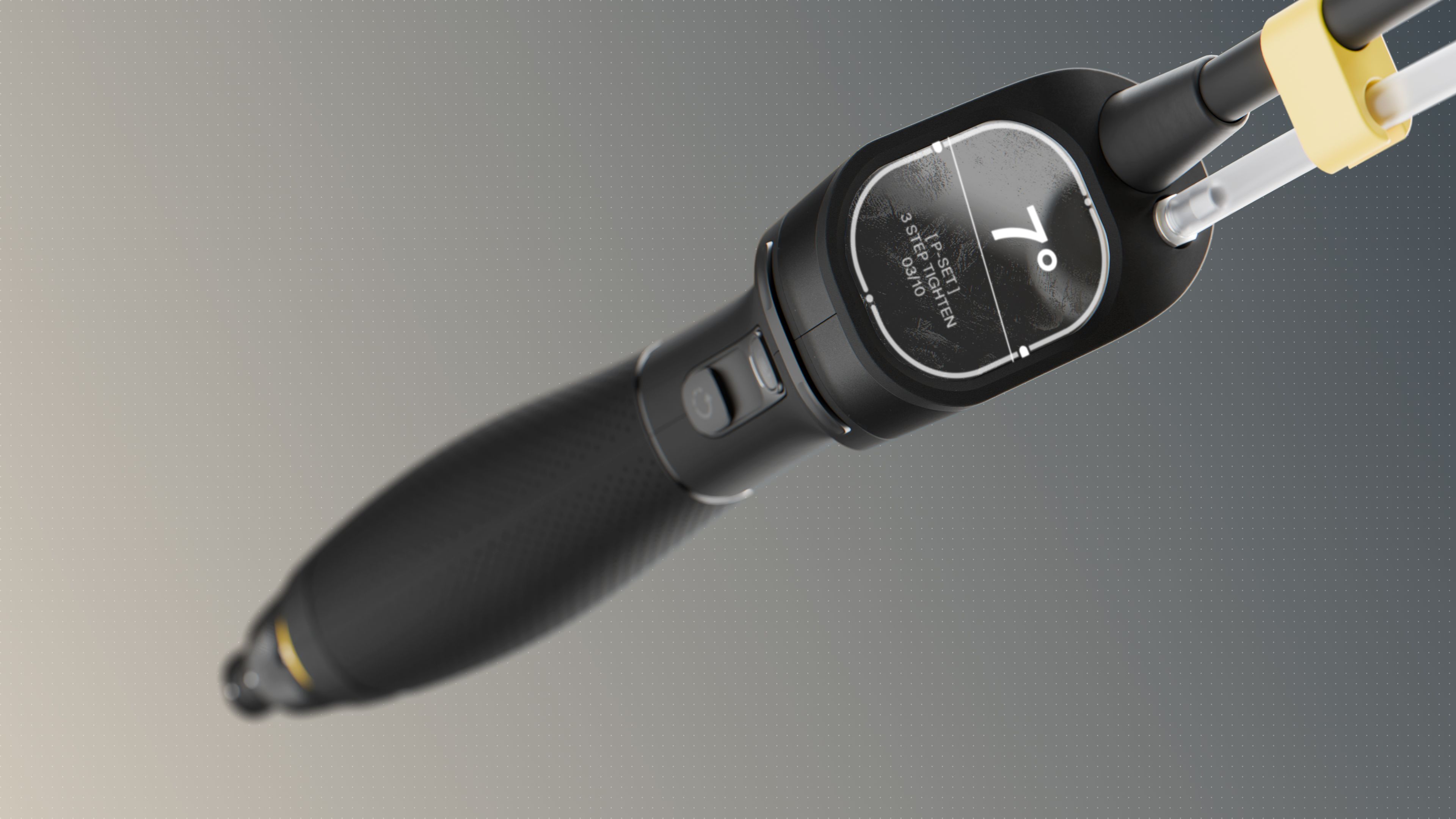
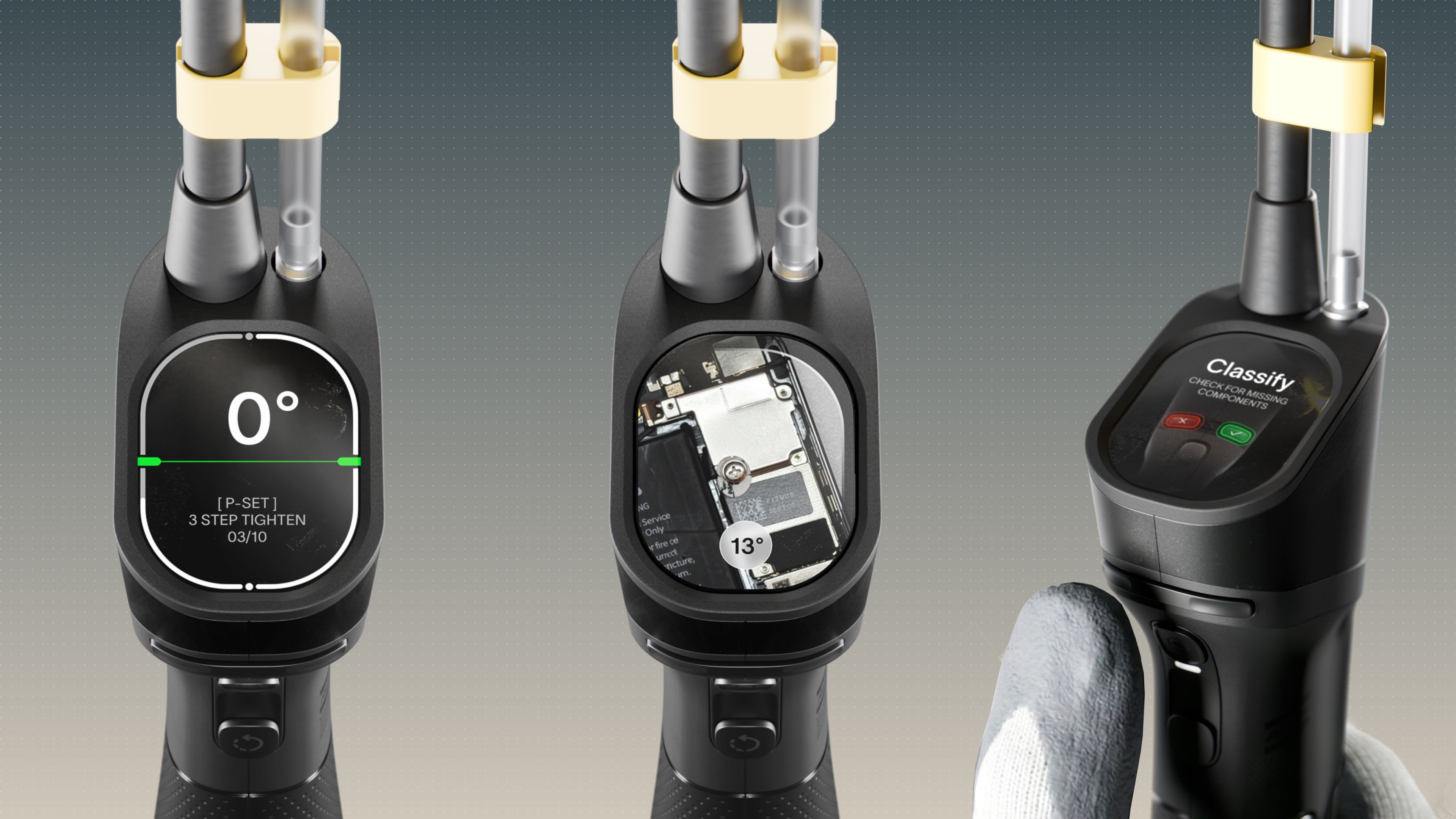
The main challenge was ensuring the device served as a preventive solution for QC errors. This meant identifying exactly which problem areas would benefit from this workflow input, which we narrowed down to misalignment and false positives caused by missing washers. To improve overall efficiency, we tackled this systemic issue from the operator’s point of view. Empowering the operator to prevent and correct these problems meant QC errors had to be communicated as intuitively as possible. They needed to understand exactly what was happening, moving the feedback loop far beyond a simple, binary red-and-green signal.
What was your personal highlight in the development process? Was there an aha!-moment, was there a low point?
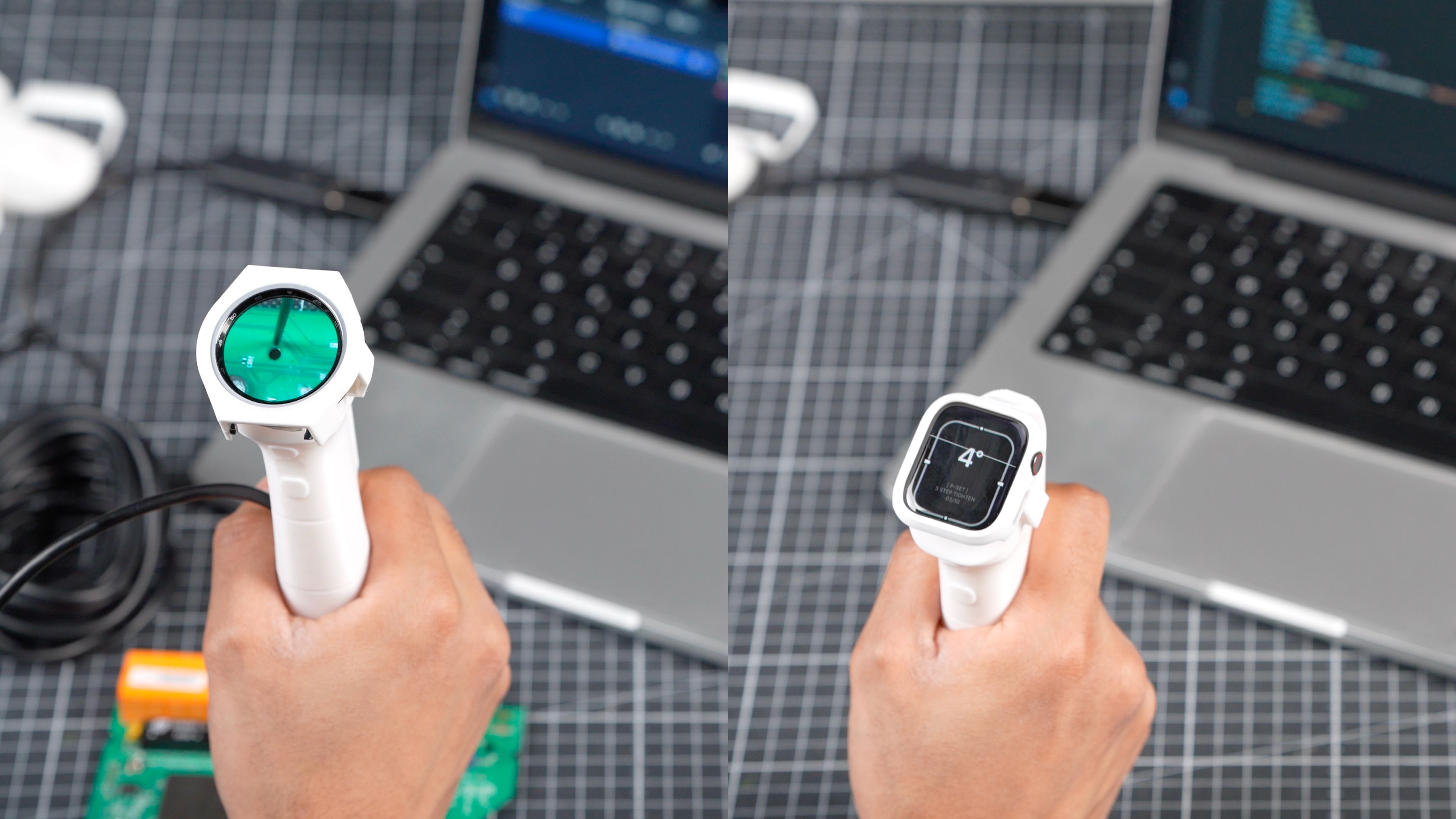
The 'aha' moment was realizing a screen could tackle all these problems at once, acting as a unifying interface to bridge the camera sensor and the haptic actuator. This concept became concrete during our initial prototype, where we successfully tested these features using a phone screen, its built-in gyroscope, and a wire inspection camera. Recognizing the screen's vast potential initially led us to overload on features during ideation, such as operator guidance and torque-to-rotation mapping graphs. However, we quickly trimmed the scope to focus strictly on solving the primary problem, reserving those additional ideas for future improvements.
Where do you see yourself and the project in the next five years?
In five years, we envision ourselves as industrial designers who thoroughly integrate UX/UI with hardware, without losing sight of core disciplines like physical ergonomics. We want to continue building 'quick-and-dirty' prototypes utilizing screens and sensor inputs. This hands-on approach elevates the overall concept by allowing us to corroborate the user workflow early on. Ultimately, we hope this project inspires our partner, Atlas Copco, to see the immense potential of the screen and magnification. By seamlessly integrating these features, they can elevate the operator's quality of life and unlock greater efficiency, keeping their product line at the forefront of the market.