Designers
Boyuan Guo
Year
2026
Category
Concept
Country
United States
Design Studio / Department
PLUS Tutoring
Three questions to the project team
What was the particular challenge of the project from a UX point of view?
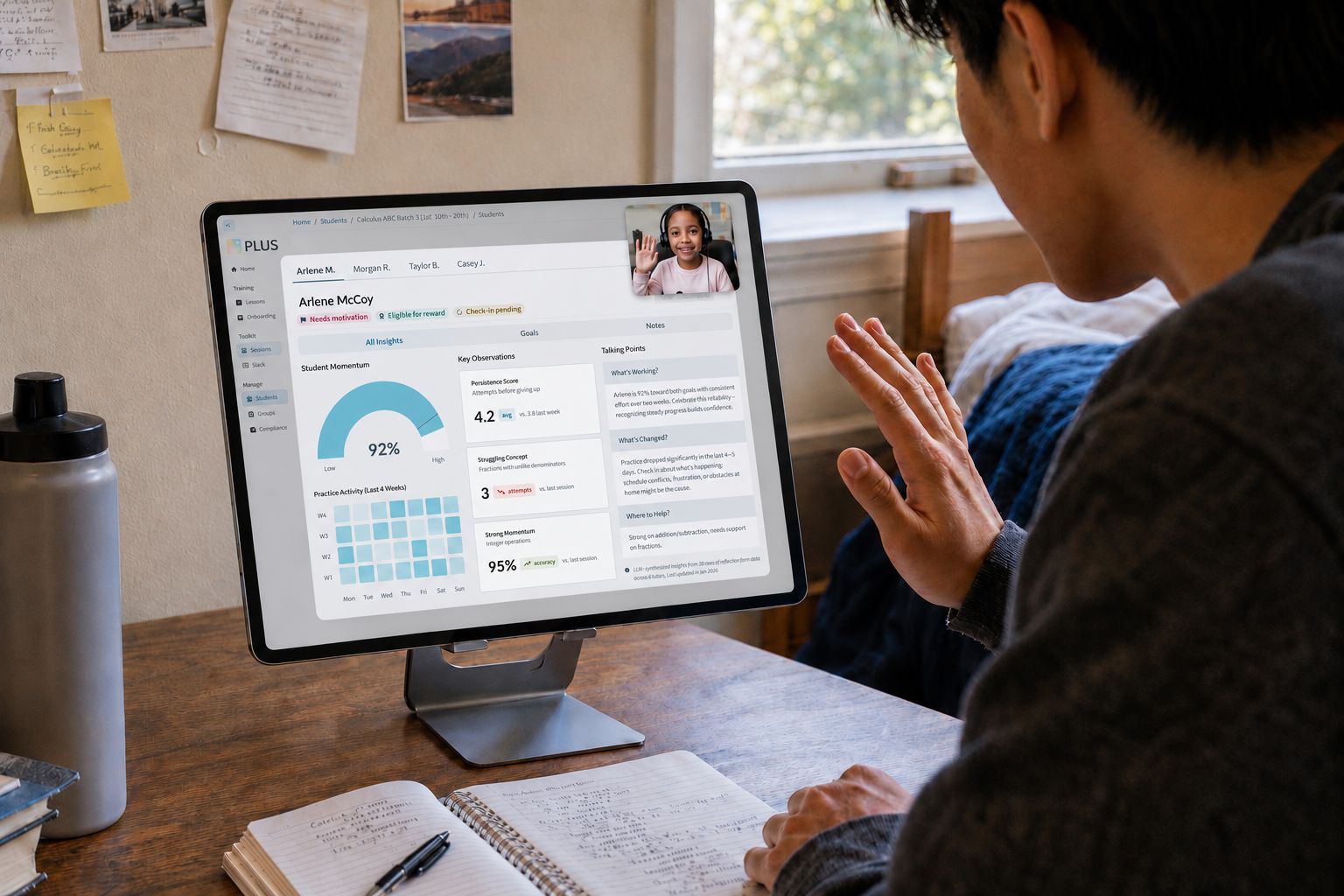
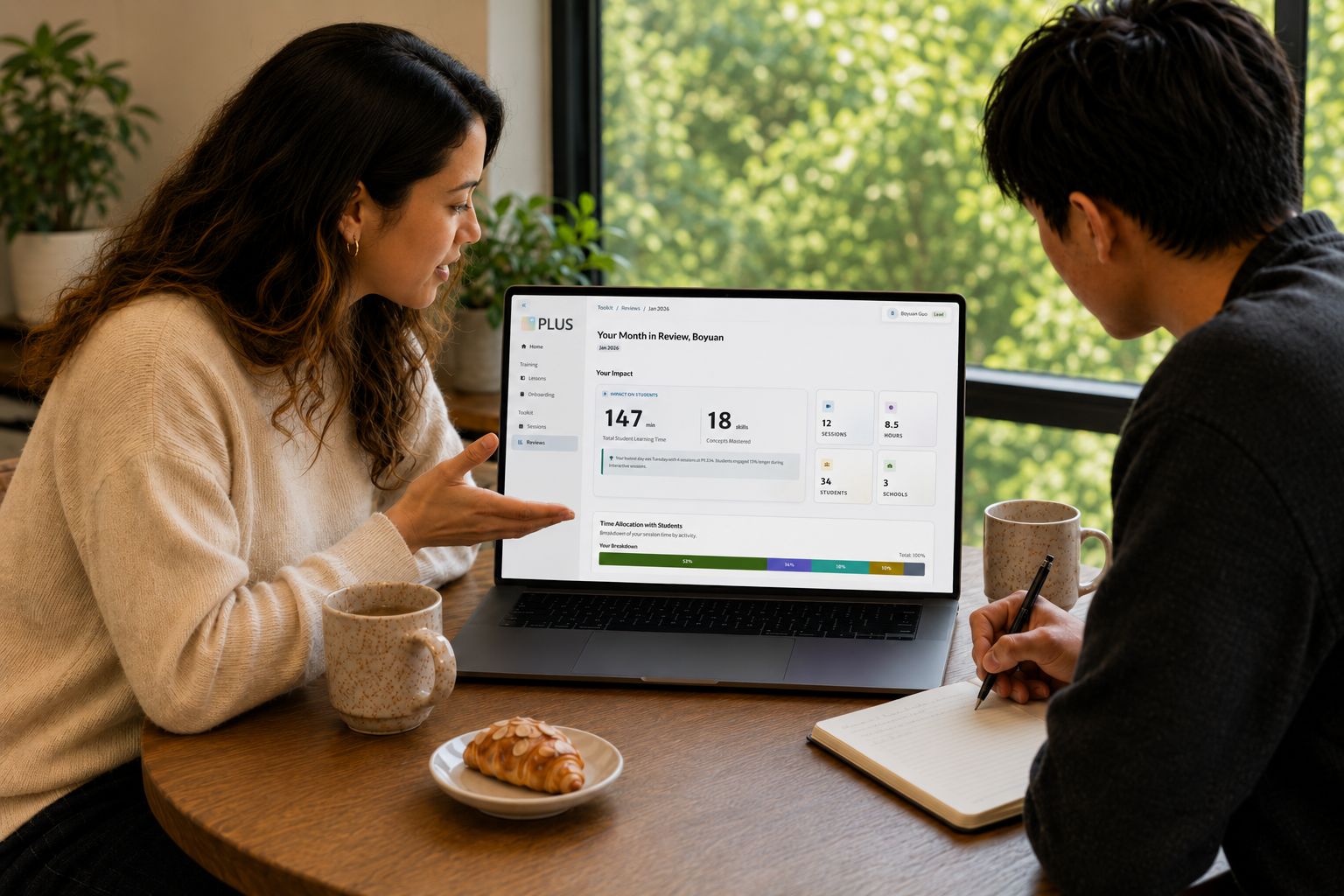
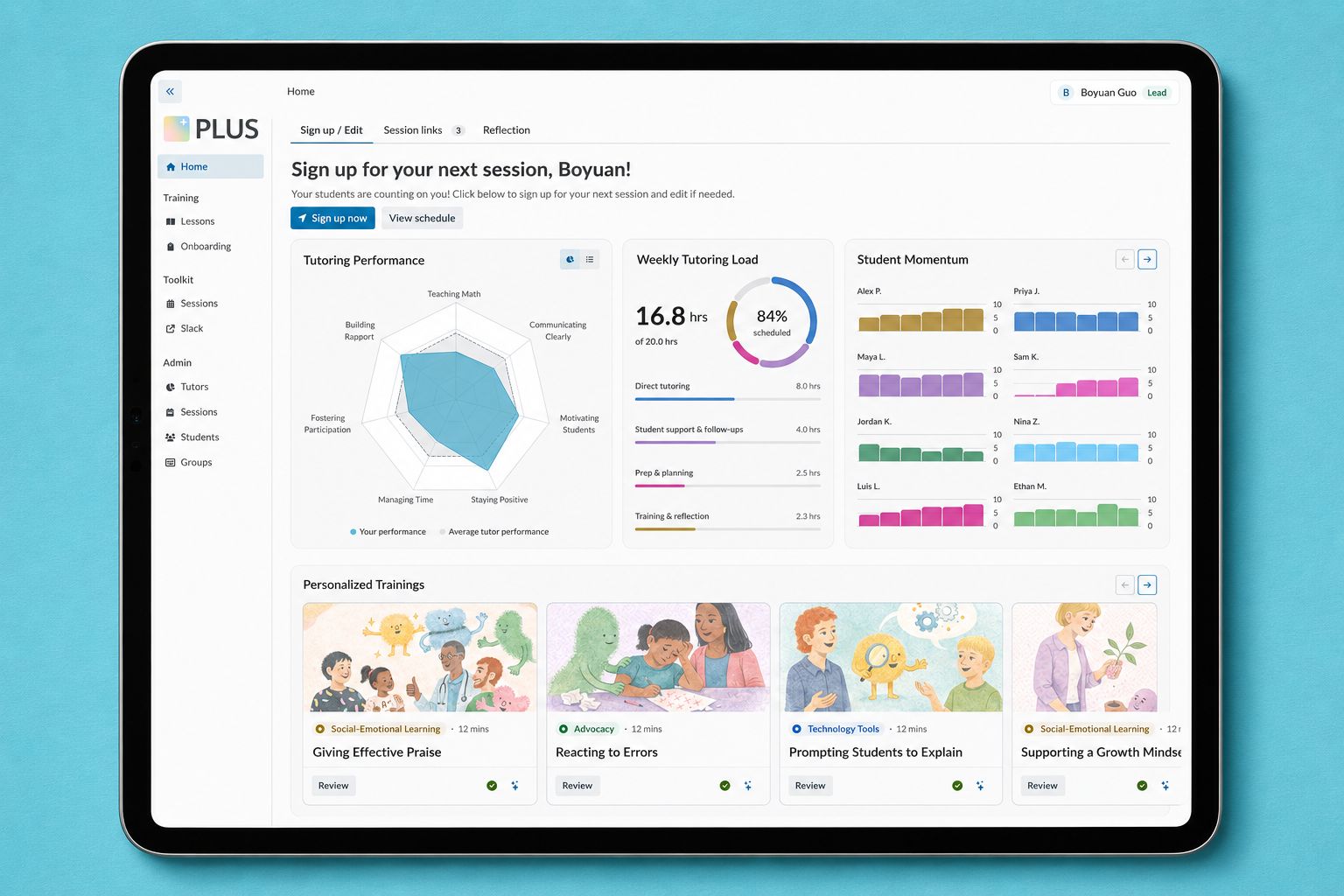
The hardest UX challenge in PLUS was designing one service across stakeholders whose needs pull in different directions. Students need time, attention, and progress. Tutors need paid practice and coaching. Supervisors need quality signals across many sessions. Researchers need reliable session data. Schools need low-burden integration. Funders need credible evidence of impact. Each need affects the others: more research instrumentation can slow a session; richer supervisor signals can pressure tutors; tighter reporting can flatten what schools actually see. As design lead, my role was to make these trade-offs visible and decide which ones strengthened the service and which would weaken it.
What was your personal highlight in the development process? Was there an aha!-moment, was there a low point?
My aha moment came when research changed what the brief was really about. In competitive analysis, most AI tutoring products we mapped were trying to replace the human tutor with smarter content or a smarter chatbot. But in classroom observation, students already had math software, a capable teacher, and classmates around them. Many were still quietly disengaged. The missing layer was not content alone. It was motivation, trust, and the feeling that someone was paying attention. A student needed a person who knew their name and kept showing up. That insight shifted PLUS from designing a better math tool to designing a service ecosystem where AI strengthens human tutoring instead of replacing it.
Where do you see yourself and the project in the next five years?
In five years, I hope PLUS is a service that gets stronger as it scales. Every tutoring session should create evidence. That evidence should sharpen AI support for tutors, lower the effort of supervision, and reduce the cost of each session. The loop closes when districts can sustain the service without philanthropy while schools still trust how student data is protected. PLUS should serve 10x the students it serves today and expand beyond the U.S., including through CMU-Africa in Rwanda. Personally, I want to keep designing service systems that evolve through use: systems where each stakeholder's work strengthens the next stakeholder's, and where the design holds across that exchange.