Designers
Jiyeon Kim, Jooyeong Hwang, Sujin Kang, A-In Chung, Yubin Jeong, Sodam Tae
Year
2026
Category
New Talent
Country
Korea, Republic
School
Ewha Womans University
Three questions to the project team
What was the particular challenge of the project from a UX point of view?
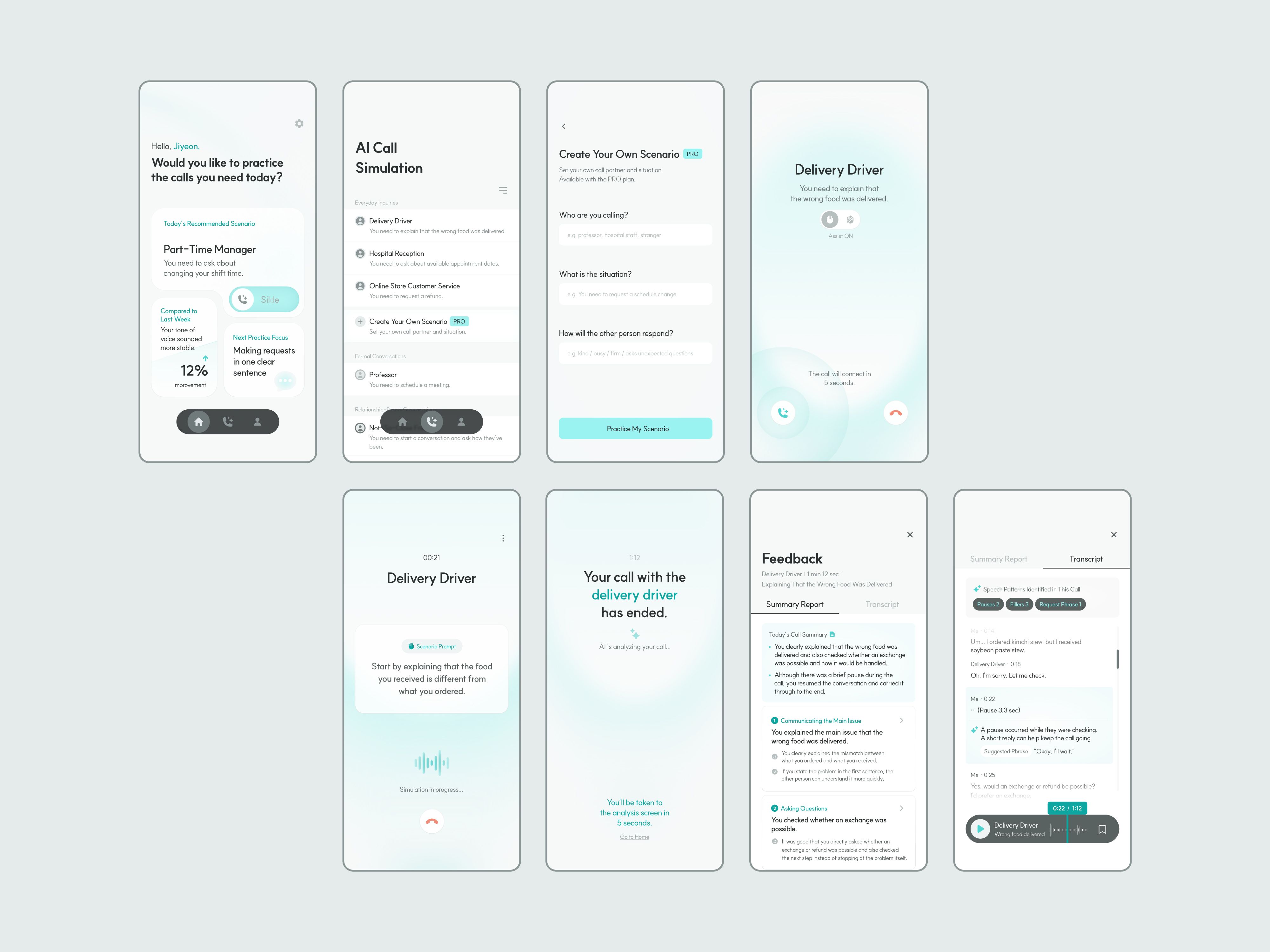
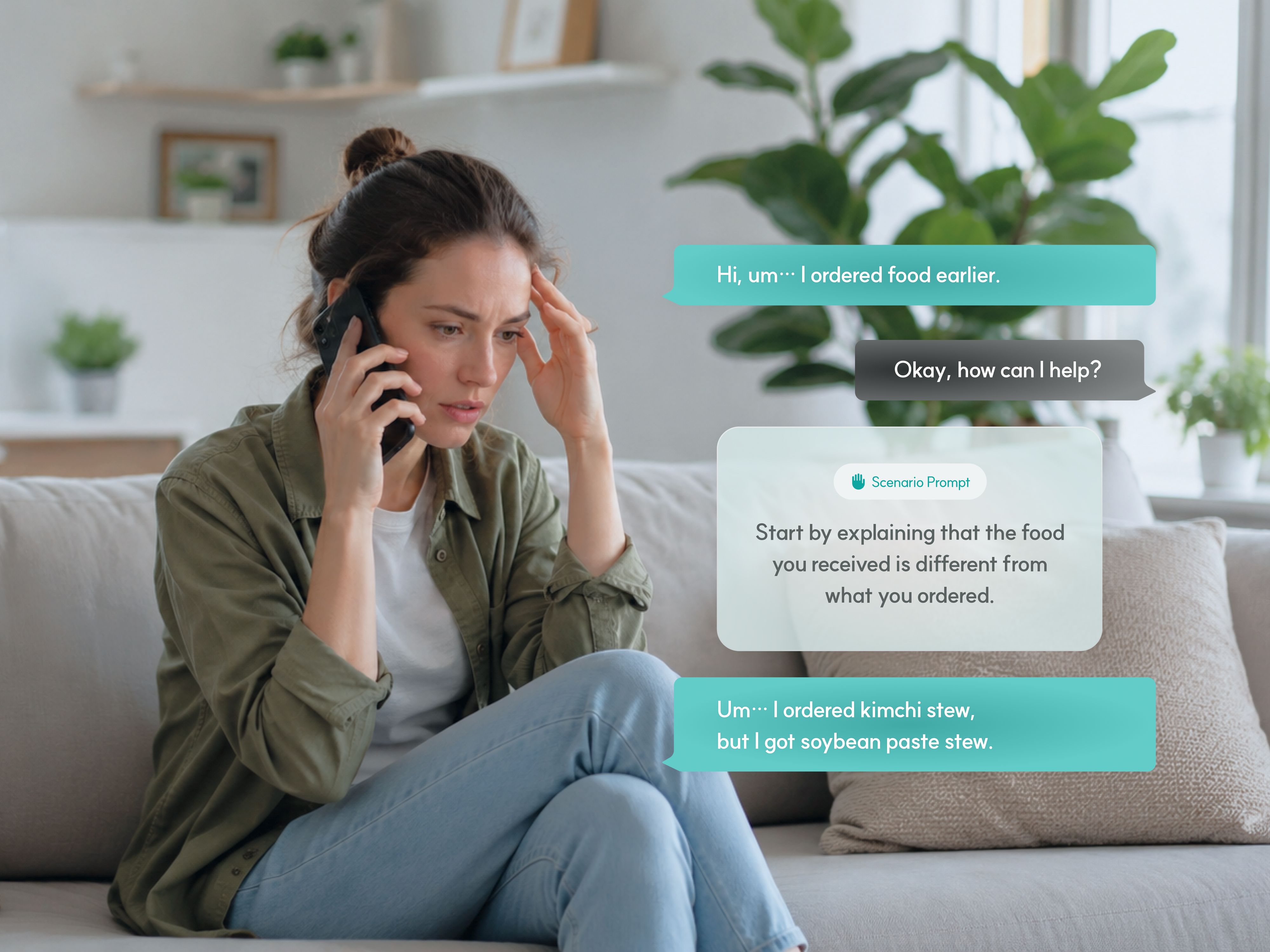
The main UX challenge was turning an invisible emotion—fear of phone calls—into a structured, supportive experience. Re:Call could not simply replace the call or provide a fixed script, because the core anxiety comes from real-time unpredictability. We had to design a flow that feels close enough to an actual phone call, but still safe enough for users to try again. This led us to combine scenario-based AI simulation, optional in-call support, and post-call feedback focused on confidence rather than evaluation.
What was your personal highlight in the development process? Was there an aha!-moment, was there a low point?
Our aha moment came during user interviews. We realized that call-phobia is not only about the fear before making a call. Many users continued to replay their words, regret their responses, and feel anxious even after the call had ended. This insight changed the direction of Re:Call. Instead of simply helping users prepare a script, we designed a full before–during–after experience: realistic AI call practice, optional support when users get stuck, and encouraging feedback that helps them reflect and try again.
Where do you see yourself and the project in the next five years?
In five years, we hope Re:Call will grow from a call-phobia support tool into a broader AI communication training platform. Starting with young adults who avoid necessary calls, the service can expand to job interviews, workplace communication, customer service training, and everyday social interactions. Our goal is not only to reduce individual anxiety, but to help people face essential communication moments with more confidence. We also hope to develop Re:Call into a multilingual service for users in different cultural contexts.