Designers
Jaekyoung Lee, Jeongyeon Park
Year
2026
Category
New Talent
Country
Korea, Republic
School
Hongik University
Teacher
Yoonju Cho
Three questions to the project team
What was the particular challenge of the project from a UX point of view?
The core challenge was designing for the wide spectrum of aphasia symptoms. Since patients vary greatly in language comprehension and speech ability, every design decision had to be reconsidered entirely.
Through 1:1 interviews and usability tests, we found interaction depth was a critical barrier. Flows general users navigate easily became overwhelming — even two or three steps caused visible confusion. Labels our team found intuitive were frequently misunderstood, requiring repeated revision.
Flow walkthroughs exposed errors invisible in wireframes. Patients stopped at unexpected points, revealing flaws only real interaction could surface. Fixing these while maintaining therapeutic depth was the hardest part.
What was your personal highlight in the development process? Was there an aha!-moment, was there a low point?
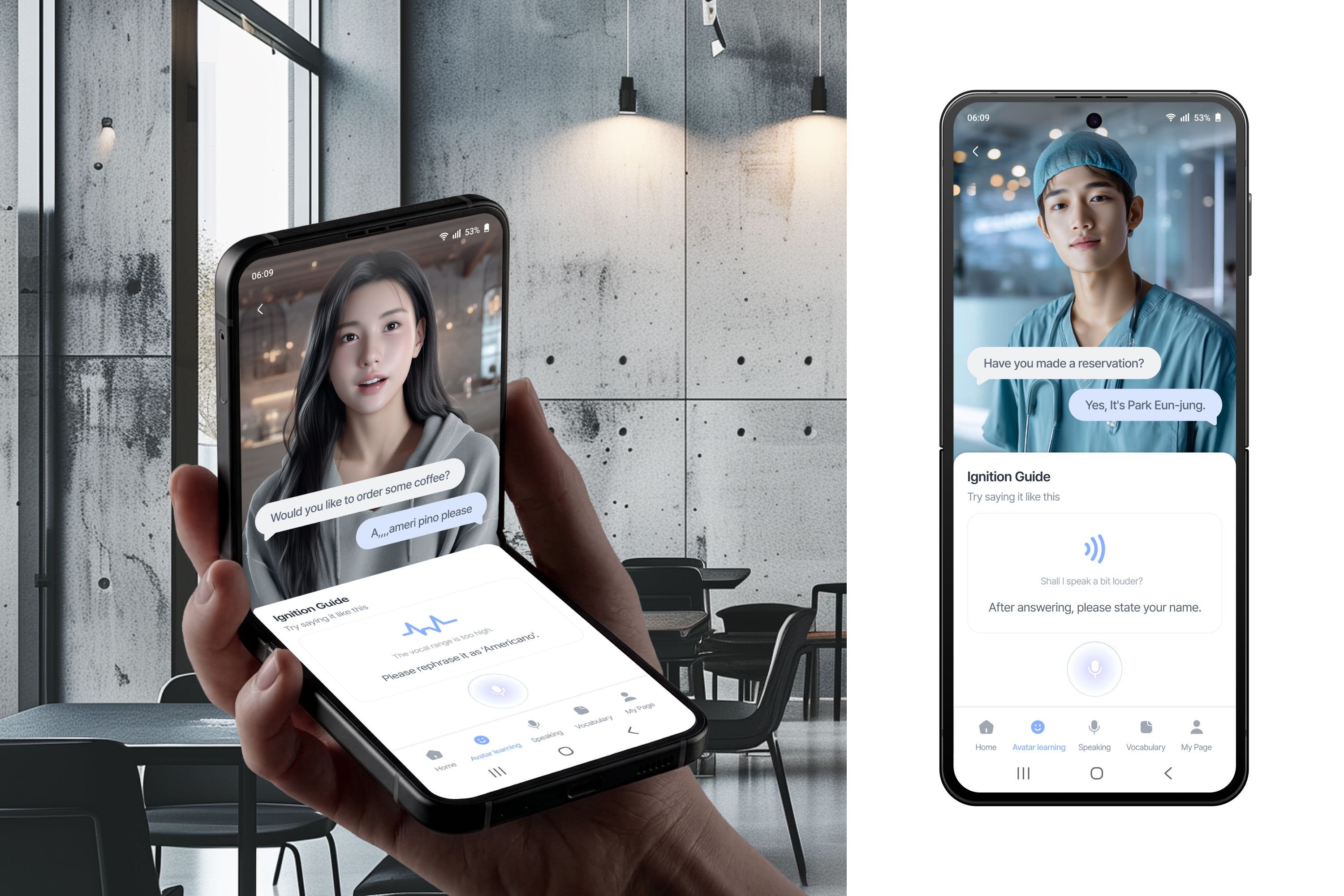
The most memorable moment was watching patients interact with the avatar. Even with a low-fidelity prototype, they engaged as if in real conversation. This validated not only the psychological comfort the avatar provided, but also its potential to sustain long-term rehabilitation motivation.
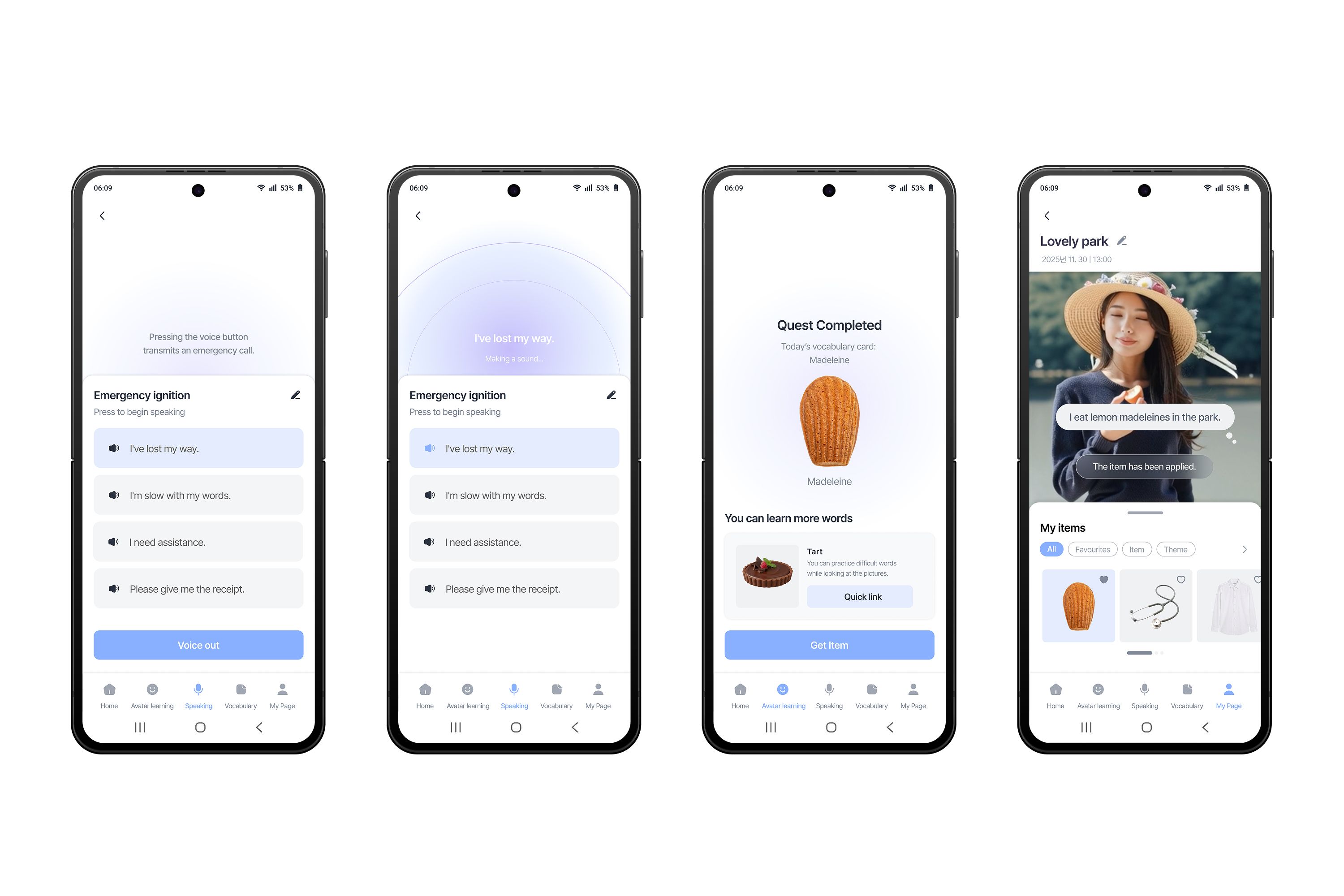
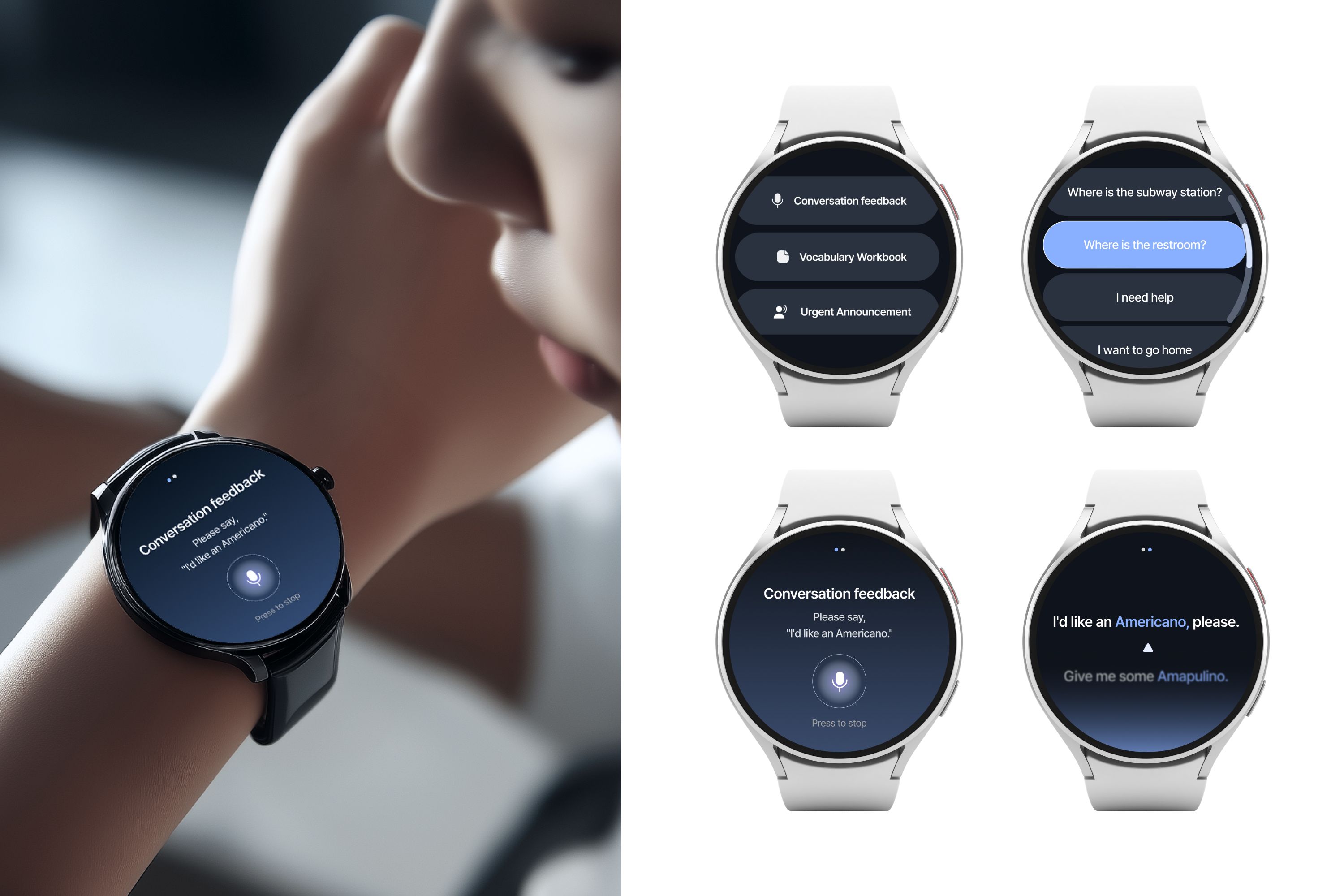
The low point came from an unexpected lesson in emergency speech. We reduced the flow assuming simplicity was always better. But during testing, several patients were startled when a phrase played immediately upon accidental touch. That reaction taught us something important — reducing depth is not always good UX. Sometimes friction is necessary to prevent unintended actions, especially for vulnerable users.
Where do you see yourself and the project in the next five years?
In five years, Reble will move beyond a prototype toward clinical validation. We plan to conduct long-term usability studies in real clinical environments and develop content tailored to diverse aphasia subtypes, empirically proving therapeutic effectiveness. The hybrid rehabilitation ecosystem — connecting patients, caregivers, and specialists — will be fully realized, removing geographical and financial barriers to continuous care.
Personally, this project deepened my commitment to designing for underserved users. I hope to keep working at the intersection of healthcare and interaction design, building tools that genuinely support social reintegration for those the system too often overlooks.