Designers
Shangyi Wu
Year
2026
Category
New Talent
Country
China
School
China Academy of Art
Teacher
Ran Tao
Three questions to the project team
What was the particular challenge of the project from a UX point of view?
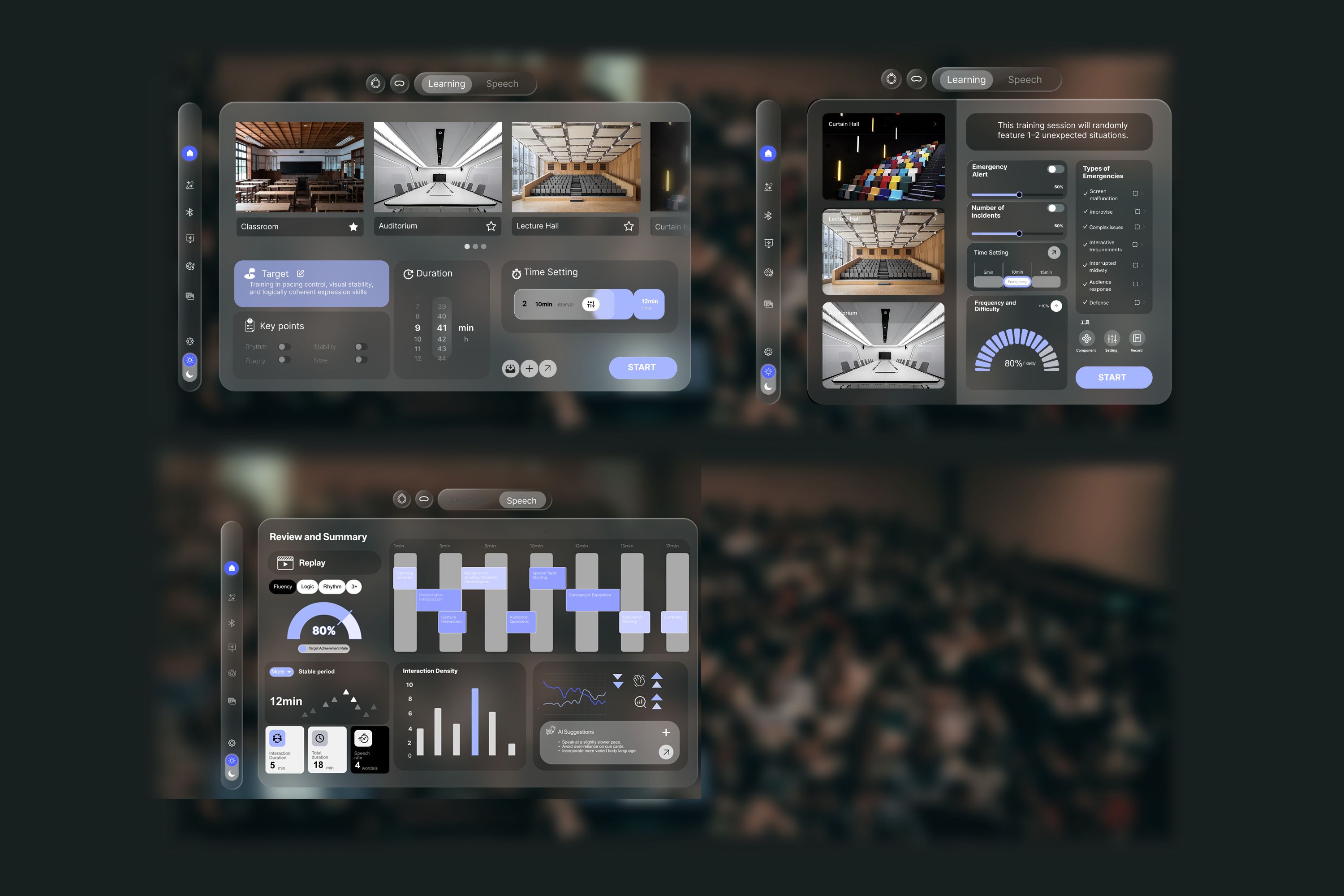
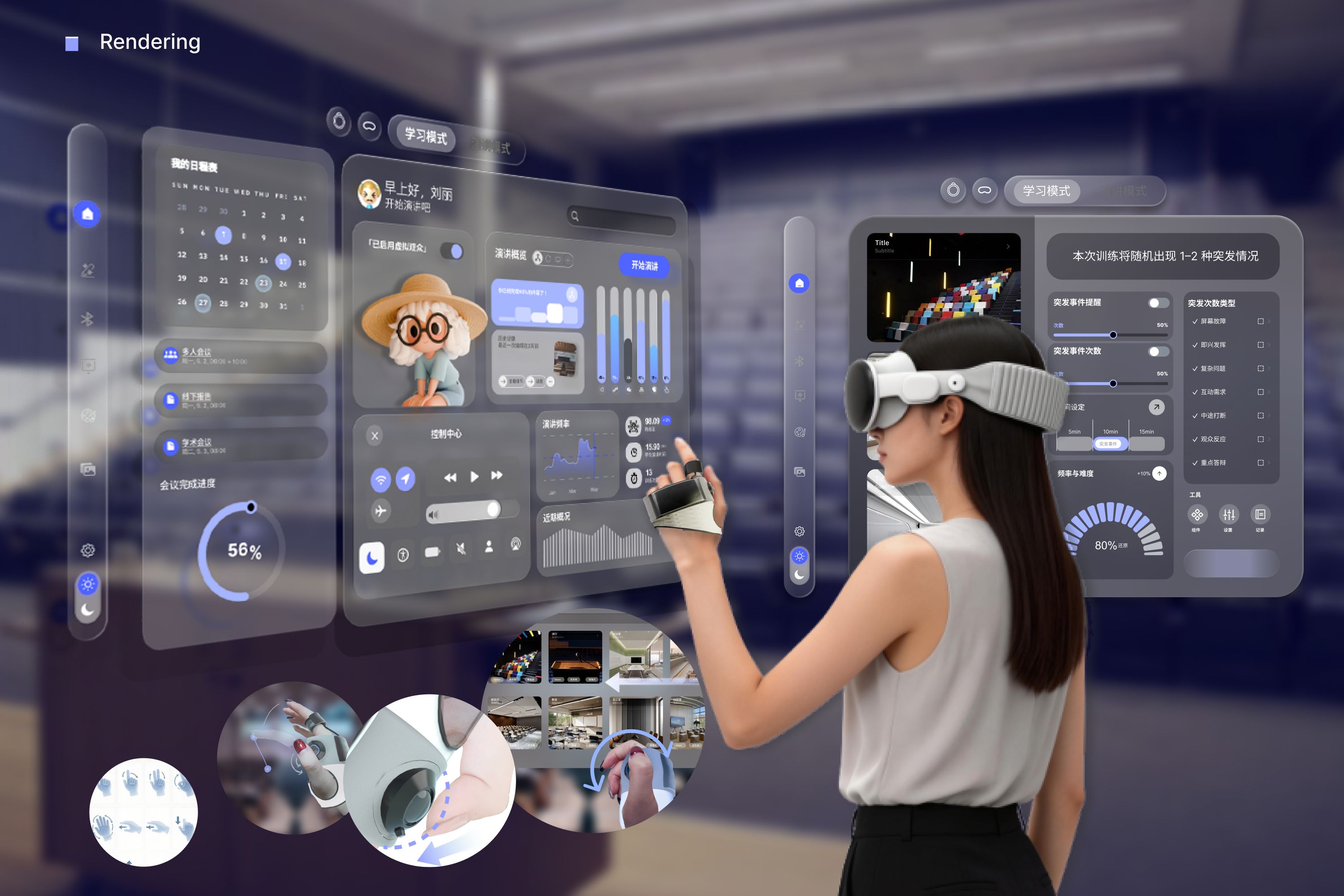
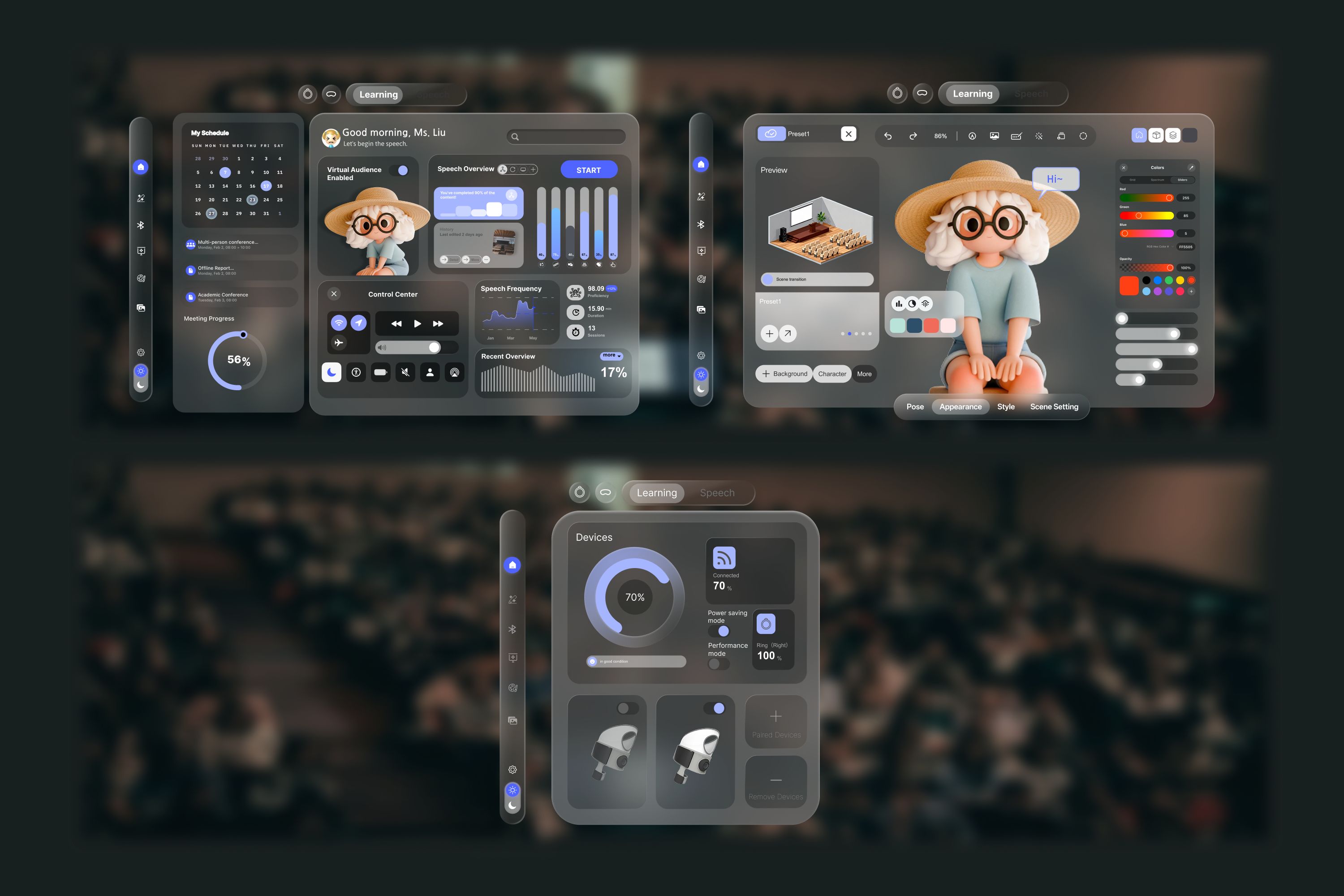
The main UX challenge was finding a balance between providing support and avoiding distraction. Public speakers often need assistance with content recall, pacing, and confidence, but excessive information or visible controls can interrupt natural communication. The project therefore focused on creating a low-interference experience. Spatial AR cues were designed to remain available without constantly demanding attention, while gesture interaction was developed to feel natural and discreet. The goal was not to add another layer of technology, but to make support feel almost invisible during presentations.
What was your personal highlight in the development process? Was there an aha!-moment, was there a low point?
A key turning point came when the focus shifted from building an AR teleprompter to designing a presentation experience. Early concepts concentrated on displaying more information, but research revealed that speakers were already overwhelmed by cognitive demands. The realization was that effective assistance should reduce attention switching rather than provide more content. This insight led to the combination of peripheral AR cues and gesture-based interaction. The most challenging moment was simplifying the interface while still maintaining enough support to be useful.
Where do you see yourself and the project in the next five years?
The project is envisioned as part of a broader generation of wearable communication tools that support people in high-pressure speaking situations. Future development could expand beyond presentations into education, professional communication, training, and collaborative work environments. Personally, the project represents an ongoing interest in calm technology and human-centered spatial computing. Over the next five years, the goal is to continue exploring how emerging technologies can provide meaningful assistance while preserving natural human interaction and expression.