Designers
Yuqiao Wang
Year
2026
Category
Concept
Country
United States
Design Studio / Department
Yuqiao Wang
Three questions to the project team
What was the particular challenge of the project from a UX point of view?
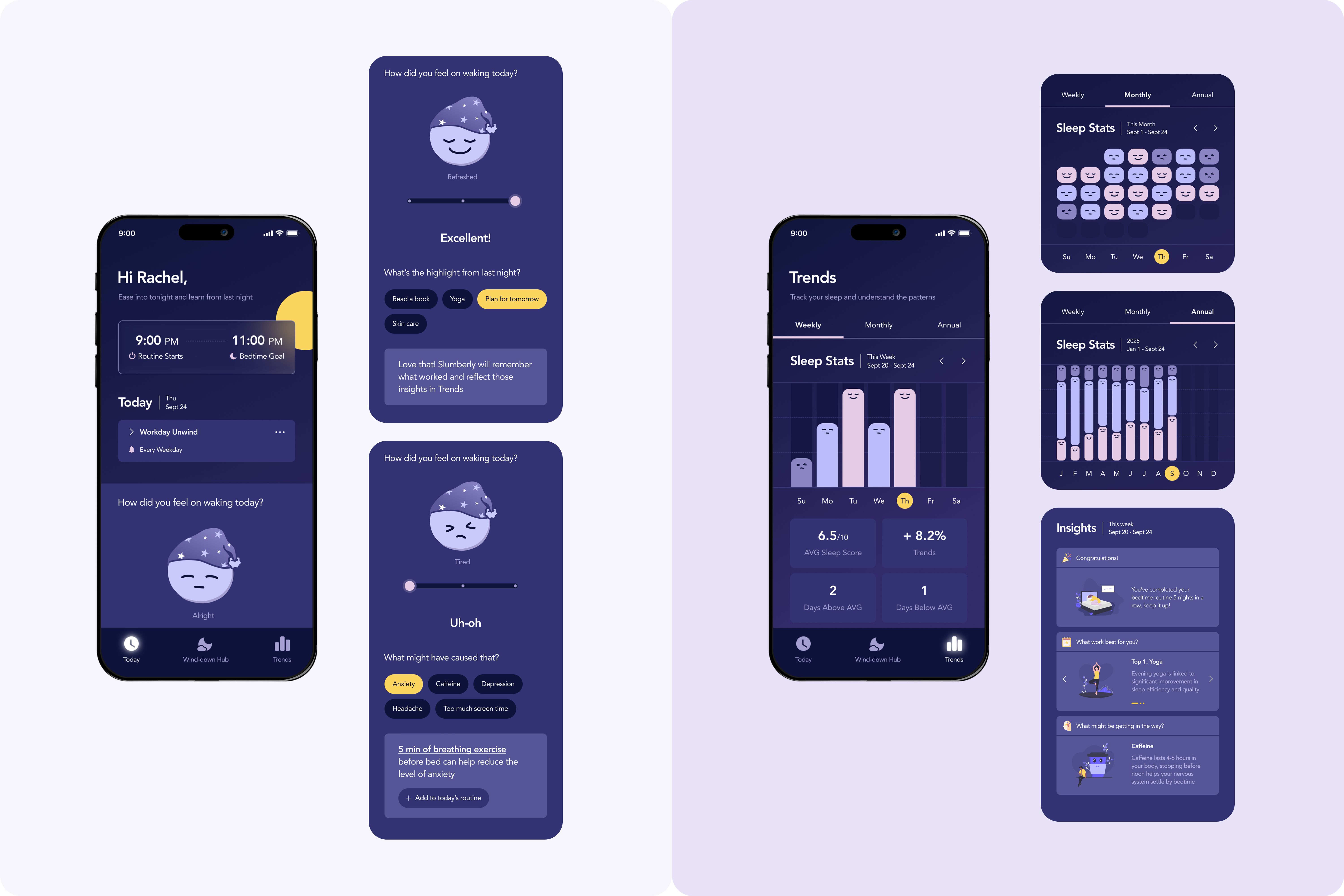
Designing for users at their most cognitively fatigued moment was the central UX challenge. At the end of a busy, screen-heavy day, any friction or complexity in the experience risks losing the user entirely. The design had to minimize decision fatigue and cognitive load while still guiding meaningful behavior change. At the same time, it had to balance emotional care with functional clarity, avoiding guilt when routines broke down, and offering flexibility instead of rigid structure. This meant designing an experience that felt effortless to start, forgiving to maintain, and adaptive enough to evolve naturally with each user over time.
What was your personal highlight in the development process? Was there an aha!-moment, was there a low point?
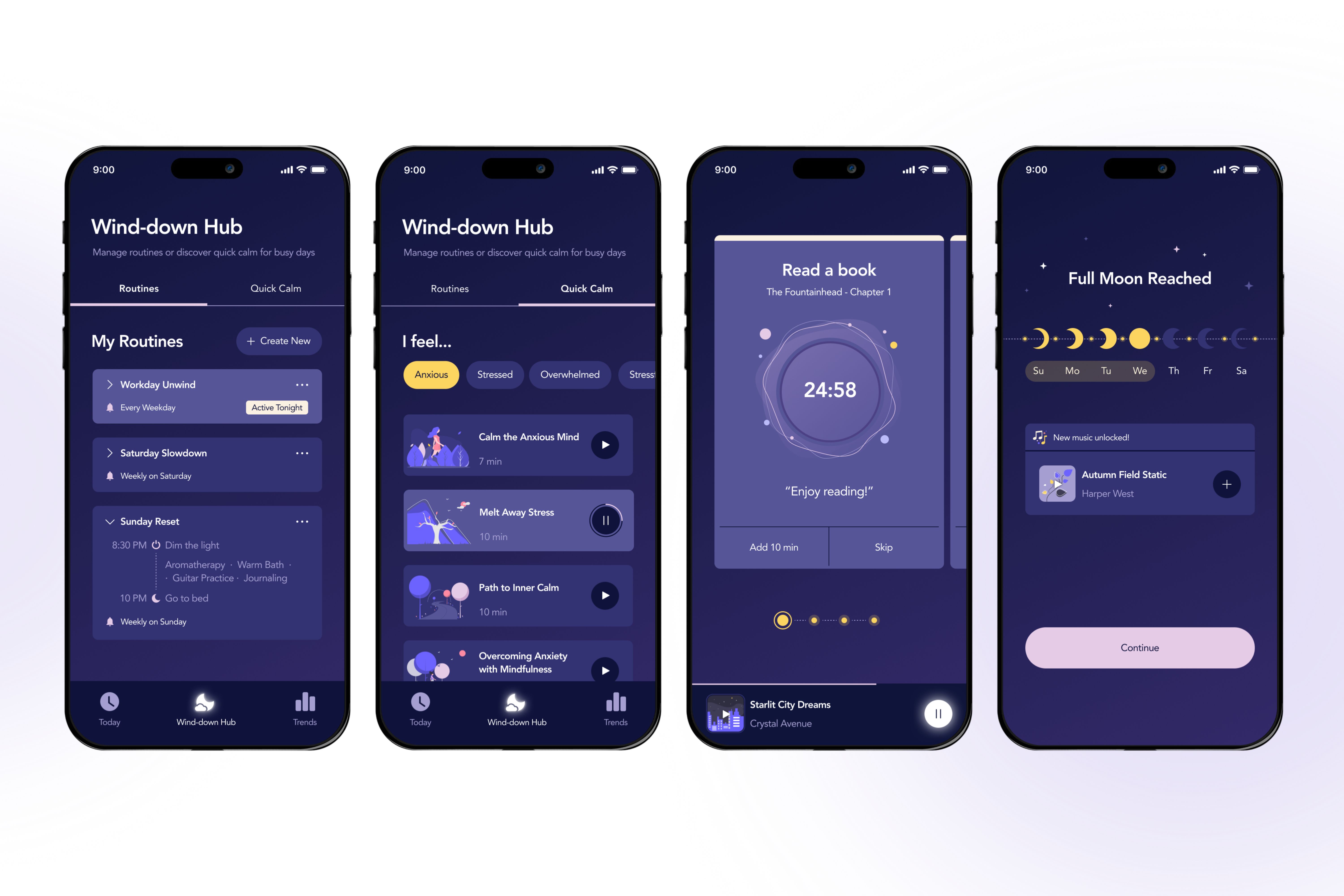
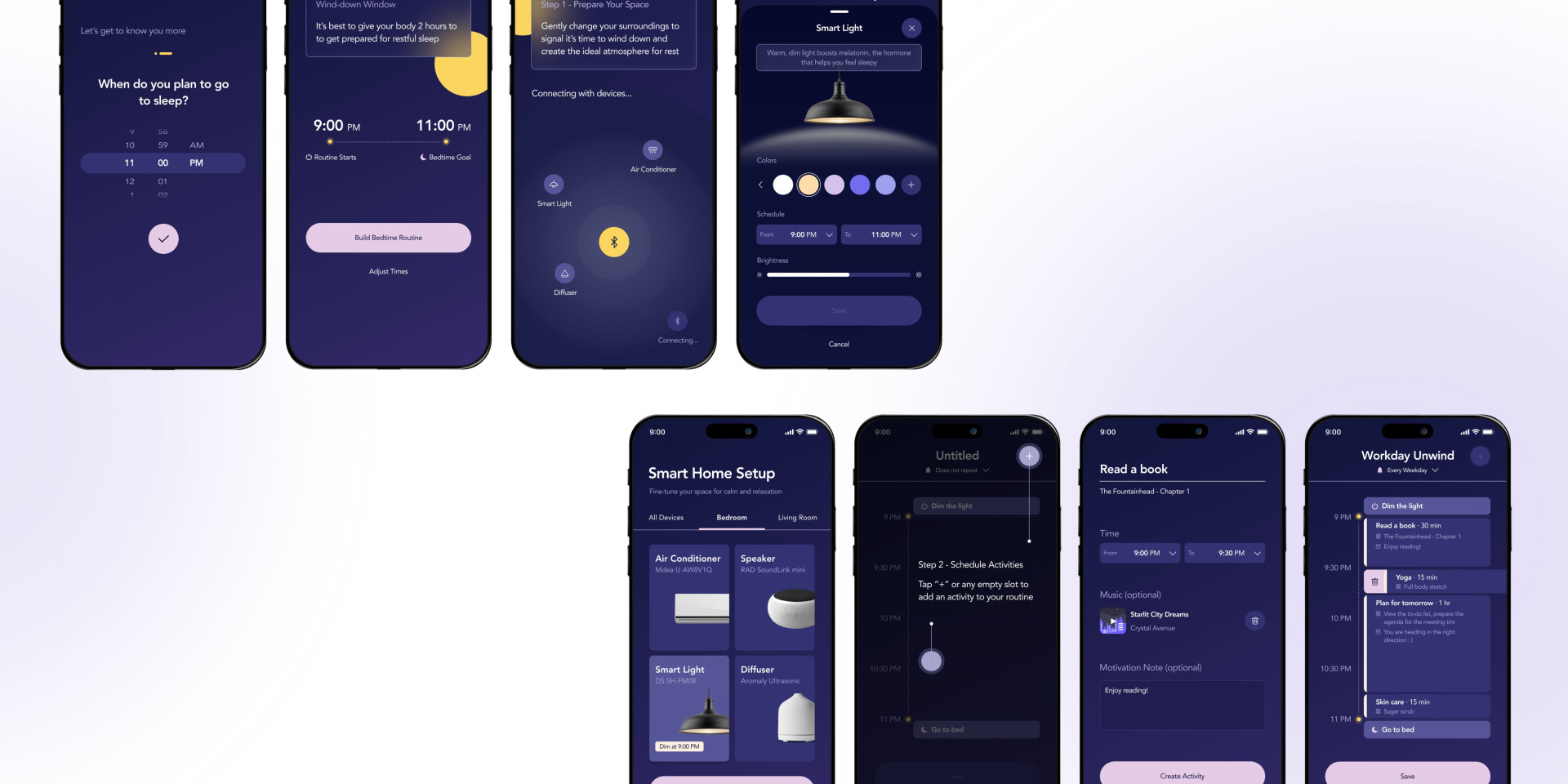
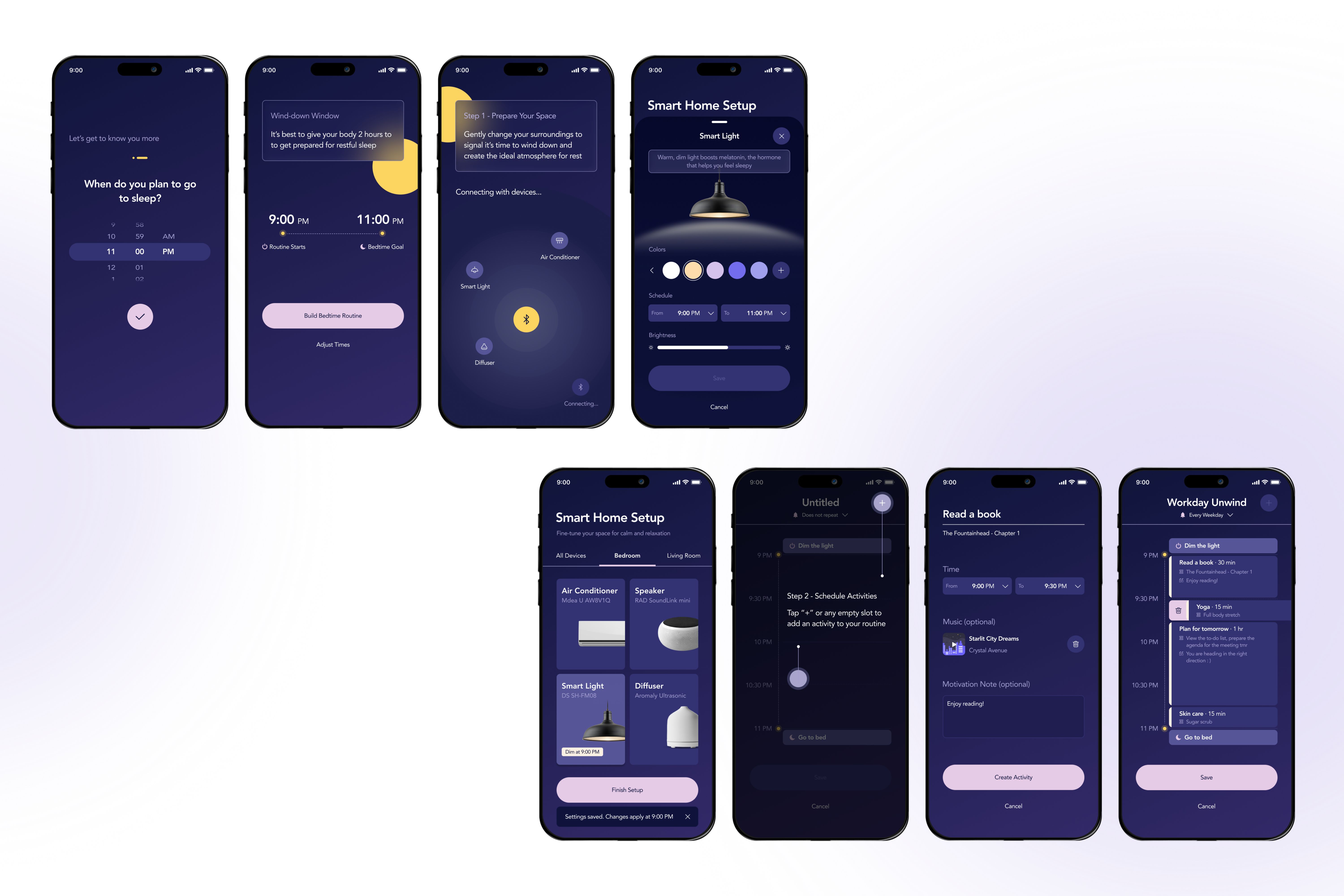
The clearest highlight came during usability testing with five participants, where two findings became genuine turning points. First, users found manual routine cue setup confusing and unnecessary, leading to the key aha moment of integrating smart home devices to automatically prepare the sleep environment at the planned time. Second, it became clear that rigid, detailed schedules simply do not fit real life, shifting the design toward flexibility by introducing quick ten-minute wind-down sessions for busy days. Both moments reinforced a core principle: reducing friction and respecting real-life constraints is what makes habit-building truly sustainable.
Where do you see yourself and the project in the next five years?
I see Slumberly continuing to grow through iteration and real-world testing. The immediate focus would be on building smoother and more reliable smart home integration, making the automated environment setup feel truly effortless. Expanding the meditation and activity library would also be a priority, giving users a richer and more personalized wind-down experience. Beyond features, continued usability testing remains central to the vision, letting real user feedback drive meaningful iterations and ensure the product evolves in ways that genuinely fit people's lives.