Designers
Beatriz Lara Espinosa, Flavia Doda, Özlem Güney, Clara Agustina, Gaia Ranzani
Year
2026
Category
New Talent
Country
Italy
School
Politecnico di Milano
Teacher
Andrea Bonarini, Marzia Mortati, Enrico Priora
Three questions to the project team
What was the particular challenge of the project from a UX point of view?
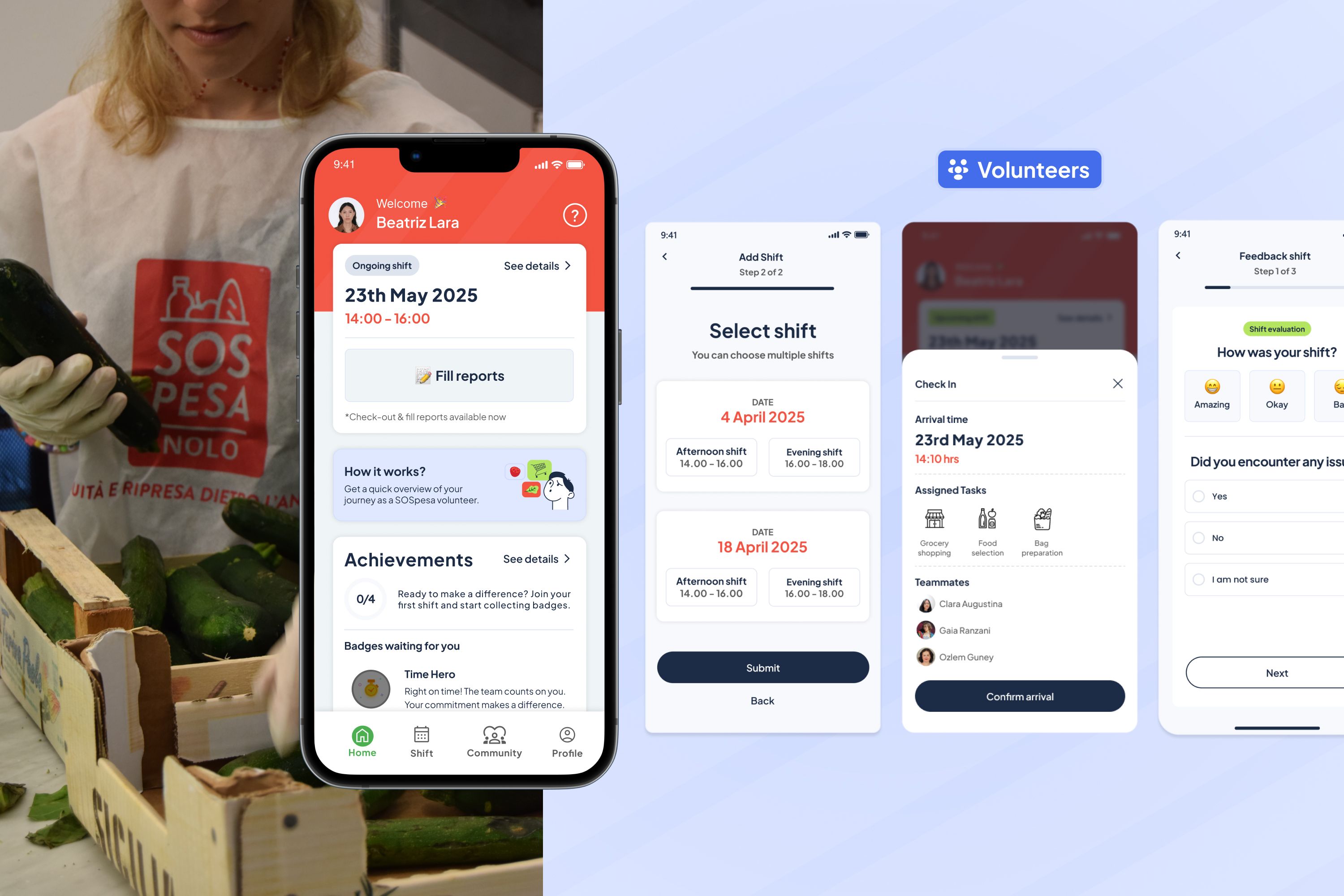
While we identified the main issue in food distribution, from a UX perspective our biggest challenge was ensuring that the entire service experience was smooth, both in the app and in SOSpesa's physical office. Since this is a service that takes place in a real community and involves face to face interactions, we had to consider not only the digital touchpoints but also how people move through and experience the service in person. Additionally, we needed to consider the community building aspect within the app as well, making sure it didn’t feel like a simple form to fill out, but instead something more engaging and human-centered.
What was your personal highlight in the development process? Was there an aha!-moment, was there a low point?
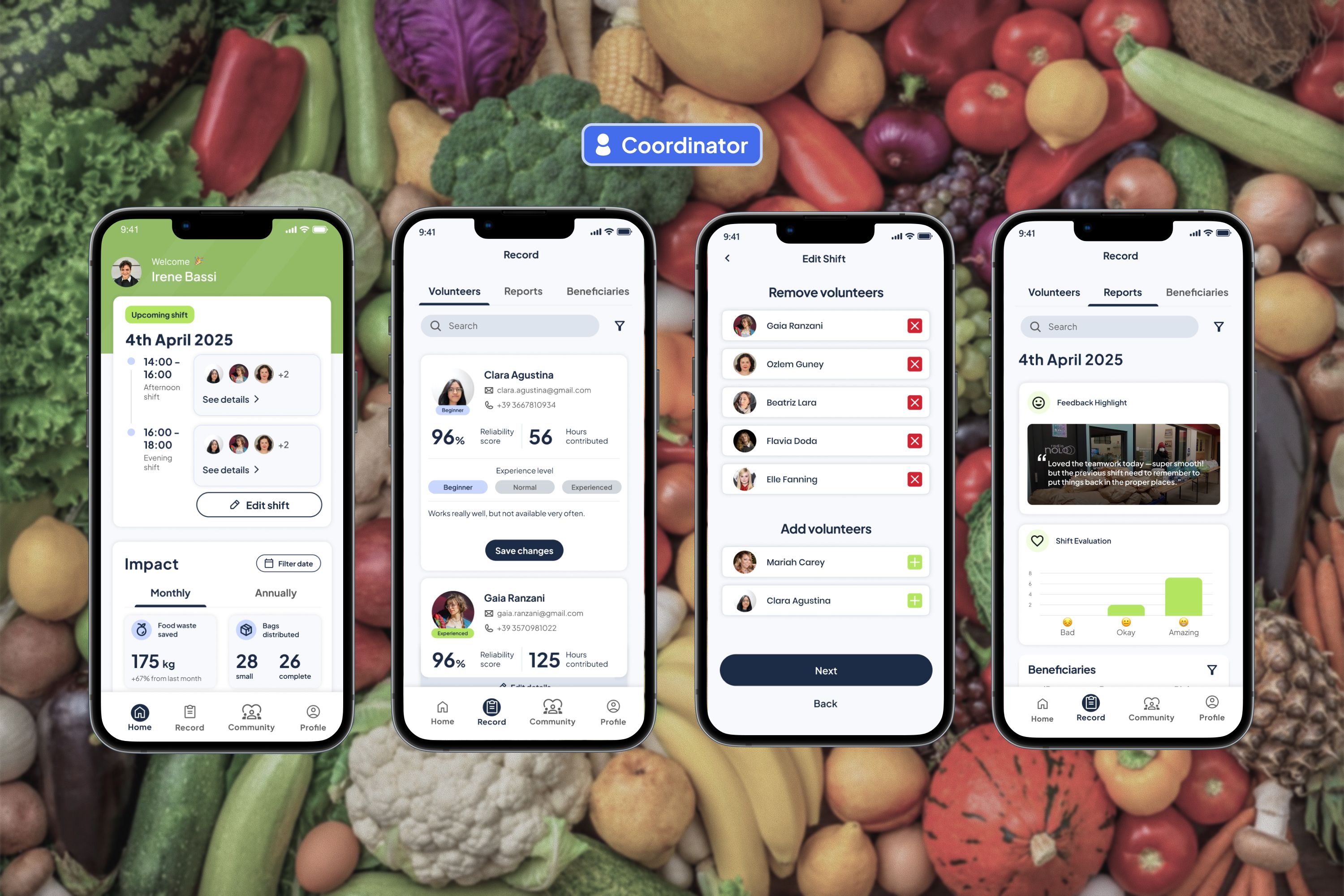
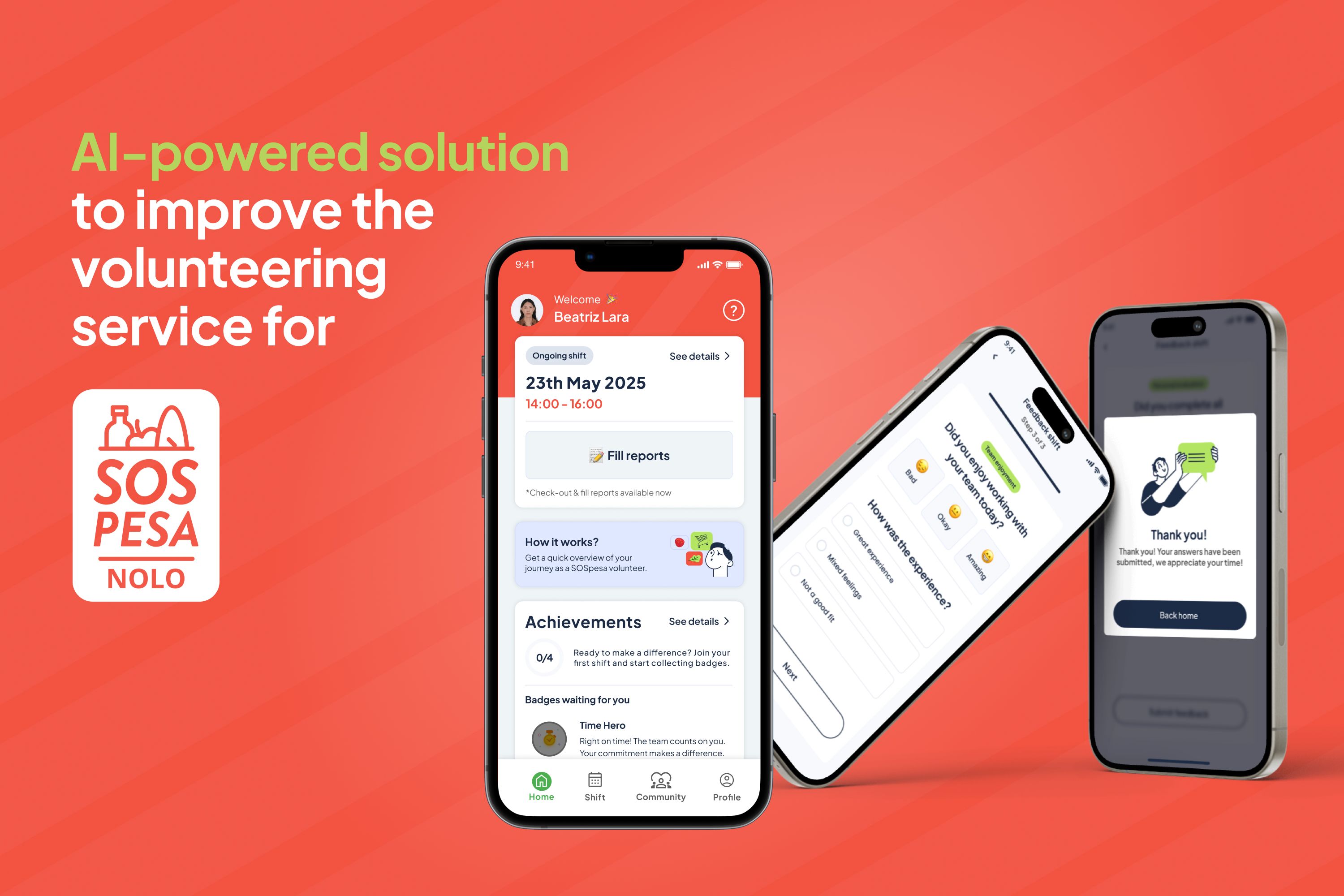
There was a low point during the initial ideation phase, when we tried to condense everything into a single system, which made the concept feel overly complex and hard to manage. We eventually solved this by simplifying the structure and separating the different parts into clearer, more focused flows. The “aha” moment was realizing that reliability in the service comes from building stronger attachment and continuity with volunteers, which helped us better define what reliability actually means within the system, including how decisions are supported and distributed by the AI component.
Where do you see yourself and the project in the next five years?
In five years, we’d like to see this project growing into a wider context, used not only within SOSpesa NoLo but also across other volunteer services in the area that already collaborate with it, and potentially expanding to different places around the world. The goal would be for it to adapt to different communities. On a personal level, we see this experience as a lesson in how important it is to design for real life situations where digital and physical experiences overlap, and where trust and continuity matter just as much as the interface itself.